

“SEAGIRT”–“surrounded by the sea.”
Origin of the camp–1945–as listed on insurance policy documents. The original camp burned in 1953 and was rebuilt alongside the site of the destroyed camp remains.
SEAGIRT–(click red text to see more)– sat about 8 and a half miles north of the lighthouse and set back from the sound. It was a well-known landmark and a longstanding one.
Feb. 17th, 1947, George A. Lewis sold Morton a half-acre plot on Horsepen Creek–alonside the Lewis’ dock site.
July of 1971, J. Morton Davis sold his rights to 125 acres of land on the banks for $40,000, but retained lifetime rights to SEAGIRT.

Neighbors would hear the distinctive sound of the Bernice L.’s engine as he set off across the sound to Horsepen Creek frequently–almost daily at times. Morton had long-standing and deepening roots in the sandy soil of South Core Banks and he wants to ensure that his family and friends could experience the special experiences that he cherished there.
Morton called himself a “naturalist” and his story validates his viewpoint.


SEAGIRT had longstanding neighbors–the Lewis’ and the Davis’


But Morton’s story on the Banks started much earlier than the 1945 origin.

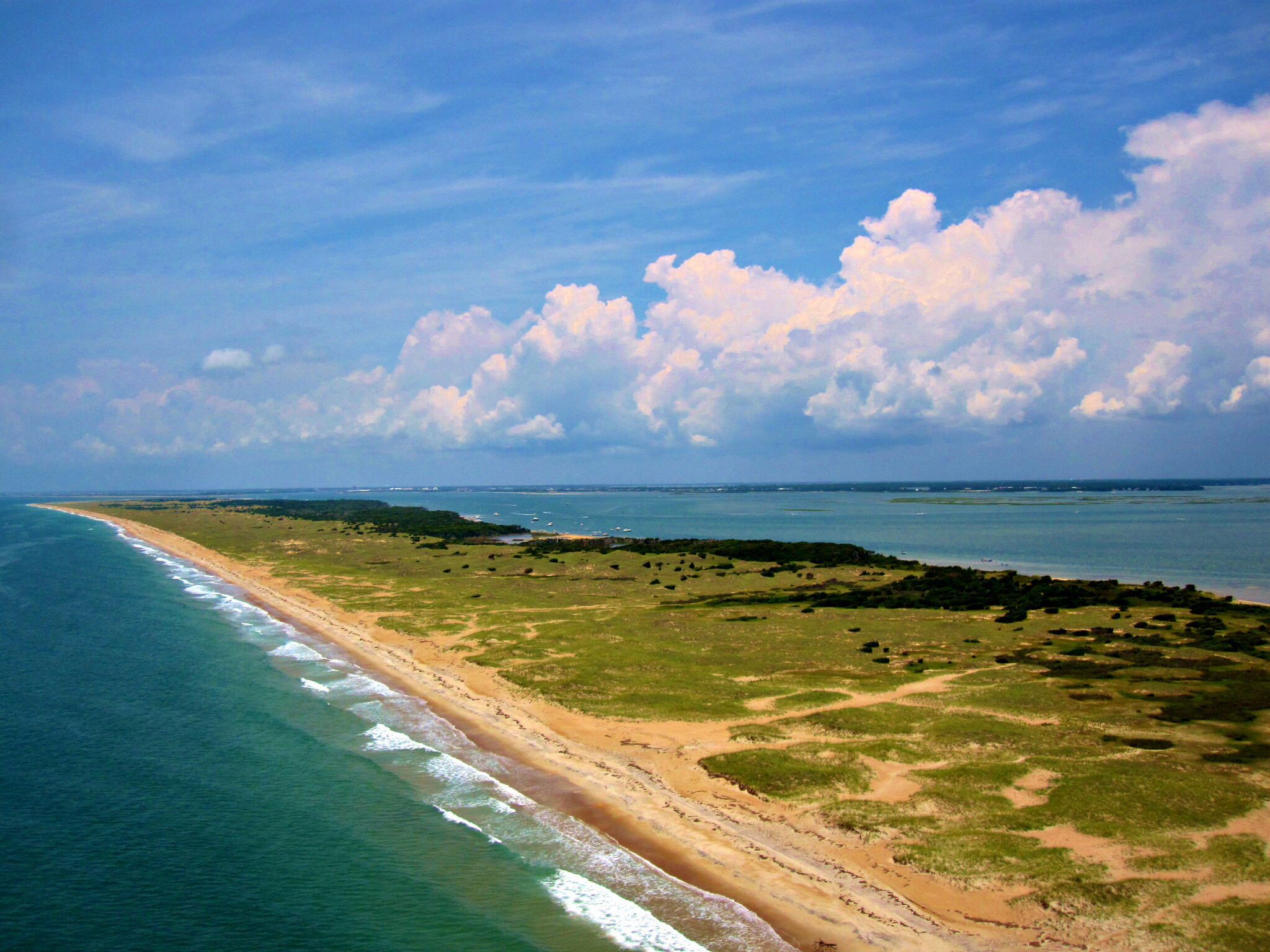
“When as a boy I was first carried to Core Banks in the month of November, there were to the best of my recall seven or eight fishing camps (commercial fishing and crabbing) scattered from Cods Creek and Nine Island Club in that area, northward to Johnsons Hammock. It was no problem to see across the Banks from sea to the sound as nothing of a growing nature stood higher than the knee. You could also see northward to the hammock and southward to what was then known as Lewis Hammock, which has now been burned and destroyed, anything that moved as large as knee high, was seen.”
“I don’t know the exact numbers but my estimate would be that there were at least 100 horses, 600 cattle, several hundred sheep and numerous hogs using the banks from the Cape to Drum Inlet.”
Beginning in late December, during these years, it was the normal thing for hunters after mink with dogs to use the Banks –and this went on until late February. When the dog got the mink in high rushes where he could not be seen, he was evicted by fire, which was left to burn itself out. In March, cattle and stock owners would burn the Banks to create new green spring growth to help keep th stock alive.”
In the early forties, and just after the war was over, an effort was begun to remove the stock from Core Banks and to get the state to in some way govern the use of this fragile area. It was not popular, but I carried the letter from Governor Hodges to then sheriff Hugh Salter as a direct order to remove the remaining cattle and stock– which was done”
The Banks began to come back in the area described above, sea oats reappeared and I planted on my property 500 pines, and 500 black locust and some oak and today the area of a mile north from my camp is an example of what, with no fire, no grazing, and care will accomplish.”


Morton Davis added supportive comments for the goal of restoration of the Banks natural, at least more natural, restoration as a valuable living geographic asset for our state’s citizens. He supported saving the Banks as an important buffer strip along the coast—which needed removal of livestock, limitations on vehicles areas of access, limitation of camping sites (non-commercial), and development of continued controlled public access (including shuttle access to the Banks), and support for return to a a more “wilderness” setting as the goal he saw as appropriate.
November 18, 1976—letter to CALO Superintendent Preston Riddel
Morton’s view was consistent with the eventual plan used to develop the Park.

The 1st camp had burned–{Jim related}-
–kerosene heat and lamps, propane lights and kerosene stoves–they (Morton and James) always talked to everybody about safety–how to do and what to do in an event–”if you didn’t pay careful attention, then something would happen”–”it was a good lesson for us growing up…you could have a good time but needed to always keep your wits about you and be responsible”
a “simple way of looking at it”
“someone’s got to be responsible to make sure everybody is safe”
Mentorship was ongoing–building self-sufficiency, sense of responsibility and demonstrating reverence for the Banks and the experience the Banks offered.


Morton Davis passed away 12-21-2001—–
“…He went fairly quickly and peacefully…..My sisters and I went to the Banks on the morning of the 22nd and picked Sea Oats, Cedar, Live Oak, wild Pansies, etc. for his casket spray. We even included a piece of the old fence from around Mr. George’s house. He surely loved that place and all of the memories with Earl and other old timers. He often told stories of those times when we were hunting, late at night around the kerosene lantern. I remember one he related of He, Mr. Gibby, and Charlie Bennett and a little Dance Party at Mr. Earls. He said everybody had a little drink and one short dance with Miss Margaret….then back to the camp to retire!”
…”thank you for being such a good friend to my Father and rest assured that he is still “Going to the Banks” everyday, at least in spirit.”
(excerpt from James, Jr. letter to Margaret Brown)


Leave a Reply