
Contents
Story
Decoys
Credits

🟡LIMITED RESEARCH VOLUME
OWNERS
Earl Davis post WWII
OTHER ASSOCIATIONS
SEAGIRT camp–alongside
Roland and Truman Davis
Jon Riggs
LOCATION
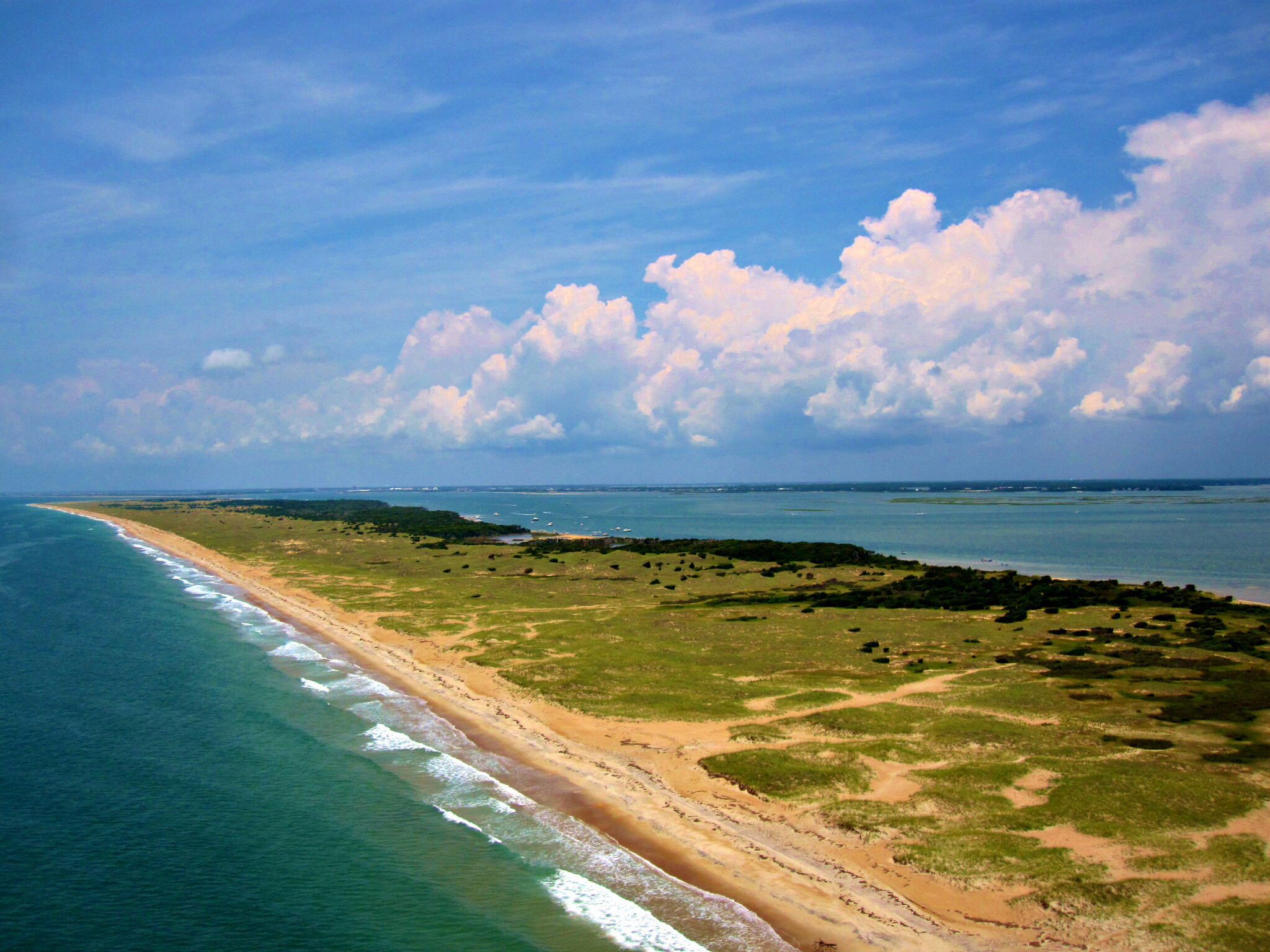
Southern Core Banks, Horsepen Creek
Story


do you know more? contact me.
Title
Earl Davis had camps on Horse Pen Creek, likely used for fishing.
Earl had a ferry—named “Margaret”. Earl and also had a barge for vehicles—several locals had a similar occupation—”in those days, on a regular weekend, the crowds would exceed the peak of visitors today” (Jon Riggs)
The Davis brothers, uncles of Jon Riggs, had a two story home on the banks there.
SEAGIRT, the camp of Morton Davis, was later located alongside to the north.
Late in Morton’s hunting career, son James obtained ownership of the associated lifetime estate from Margaret Davis. When Morton passed, his lifetime estate lapsed and James moved the structure to the adjoining property–no simple task. SEAGIRT remained on that site till Margaret died.


Jon Riggs Interview — July 10, 2023
Jon spent his youth on South Core Banks—“since I got out of diddies”—with his Grandmother’s brothers —“uncles”—Roland—Earl—Truman—all Davis’ (and George—who died earlier and Jon never met). The Davis’ had 4 sons/4 daughters.
Jon Riggs’ mother was Lionelle—Dorothy (Dolly) and Lionel Taylor were her parents.
The family had a “Grant of Use” from the King’s Governor dating to pre-revolutionary times—stretching sound to ocean—“from before the Republic”.
Morton Davis (unrelated) built a camp alongside Earl Davis’ property—built from half of a Cherry Point house—in return for providing diesel fuel for the generator and other camp uses—later Morton appeared with a deed to the property, but the property was Earl’s and Jon’s family property. The deed to the site was a quitclaim deed—original deeds which were on microfilm (for this area and also the entire island were damaged—something happened in storage— could not be read.
The Davis’ place was a two story structure with full lower porch all around and also a second floor porch—Jon was 5-6 yo at that time and thought that this was “where they lived”—1970-71. The structure had started smaller, but like other sites, it was continually added onto—the house had an air-cooled diesel which ran a generator from one end and water pump from the other end. In 1963, Earl had a man from Bridgeton come and dig a well between 500-600 feet down—Earl said “we are drilling down till we get water or oil or chop suey”. Jon provided a schematic of the house layout.
Jon came to believe, as a youngster that—“men lived on the Banks—women on “this side”—i.e. the western shore and mainland”—because that was all he knew till 6 years of age.
Jon’s parents split before his memory of his father—his dad went to Chile with the military there—his mother had to work—so his retired great uncles had him always tag along behind one of them as soon as he was free of diapers.
His mom had custody—as soon as Jon was “out of diddys”, he went under the wings of the uncles—all three retired uncles had worked on pogy boats—as captain, engineer etc.
The uncles lived on the Banks where Jon spent his early days up and down the banks—in boats and skiffs, net fishing, surf fishing, duck hunting—etc—“having our best life”—not thinking that there was an entire world out there beyond the surf”—
At 6 y.o., Jon was called to the end of the kitchen table and in a stern voice—a voice like, Jon was in trouble—Jon was told he had to “go live on the other side, with the women”—Jon argued his case—“I haven’t done nothing wrong to be punished for”—(it was about the time for the mullet fishing to begin)—“I hadn’t done anything”—in response, he was told—“if you don’t get your schooling, you’re never going to do nothing”.
Uncle Truman built the camp-side pier out of timbers from bridge timbers—coated with tar and gravel. Telegraph poles were scavenged for —cross-ties were used for underpinning Banks and mainland homes, copper wire had many uses, insulators were taken from abandoned telegraph poles.
Earl had a ferry—named “Margaret Earl” and also had a barge for vehicles—several locals had a similar occupation—“in those days, on a regular weekend, the crowds would exceed the peak of visitors today.”
Besides the Davis/Lewis /Davis compound, about a mile north at the hammock and about a mile south—there were clusters of camps—none known by name to Jon—and then, nothing till the “Clubhouse” to the north or the lighthouse to the south.
Jon remembers visiting “the clubhouse” in off-season—the place was packed—at the long counter, Jon was served fries and food—his grandfather had repaired the clubhouse generator—inside and outside grills were busy preparing food for the crowd.
“From th lighthouse to Cape Point, there were 50-60 camps along the way—all the way down—and there were 50-60 camps going north before reaching the Davis home.”
Fate—the structure was burned—?NPS or arson?—Jon is unsure.
“When on the Banks—it was not just an equalizer but like all were “family”—wealth, stature, class—were left on the western shore.”
“There was no hierarchy carried along to the Banks—and Bank’s relationships also carried over when away from the banks. Old “rules” of society’s structure didn’t matter on the Banks—those rules didn’t count here on the Banks—it had always been this way.”
On the banks, even if you didn’t like somebody, everyone was treated respectfully—“you didn’t have anybody else” —if something happened or there was a need—if help was needed, you stepped up—in spite of how you felt—speaking to and treating everyone with deference—and—everybody knew everybody.
Even current visitors—3rd and 4th generation “visitors” to the area—fit in and found things the same way—keeping a connection with their timing of visits and staying in the same site from last year, from last generation—within their family tradition.
One family continues to return to their camp site—in-shore from a cedar piling that is a marker of their earlier family camp structure site—even as the terrain becomes less favorable for their camping there—they still persist/persevere—to return where they and prior generations were in the past—a touchstone for them.
At about 11 yo, Jon and friends spent their time at Les and Sally’s—it had a restaurant, a store, a landing strip, parking lot and more
—Going into L&S, and without two nickels in his pocket, he entered the store with his uncles—crowded—they had had to park way down the sandy road away from the structure—Jon entered and felt Sally snatch up his shirt collarl and pull him along—Sally was formidable and not to be resisted—and reaching the end of the counter told a patron to move off his stool—“I a’int done” -he said. “move away”——“I’m going to feed the youngster”—Sally said—then proceeded to return with fries, and sandwich and drink—Jon didn’t know what to think, since he had no money—he looked around at Roland who winked at him and Jon knew it was alright. Les and Sally had no children and Jon says that many a youngster got spoiled a little there.
Les had a tractor and bulldozer which he used to pile disabled vehicles/stacked —to build artificial dunes.
Friend, Glen Lewis (NPS), and Jon—spent a lot of time around Les and Sally’s-riding motorbikes on the banks.
Jon remembers The Merita Bread truck—converted to a beach buggy and used for years—owned by the “high maintainece lady” and the husband with graying hair who used it—she ‘bedecked with jewelry and “pomp’—the Merita truck was collapsing as the frame was rusted away—the Gray-haired fellow purchased a Winnebago and finished it out right, inside and out and with customized drive train and 4 wheel drive etc—she complained —“why couldn’t we have fixed up the Merita Truck instead”—it was perfect to her and she did not want change—wanted to keep things the same.
Also remembered is the “Beach-buggy penthouse”—a truck bed cover—a little elevated under-pinning atop a vehicle—one door facing the wind and forward window cracked—cool wind blew thru the queen size bedroom made by it.


Gallery
SEAGIRT, the camp of Morton Davis, was built on an adjoining plot and the structure was moved to the life-estate lands of Margaret Davis when Morton died and Morton’s family was about to lose their (also estate for Morton) camp.


Credits
- NPS files and archives
- Jim Davis, Beaufort, NC -grandson of Morton Davis
- Jon Riggs, Carteret County
- Other references within text