

🟡 MEDIUM RESEARCH VOLUME
OWNERS
Edwin Binney
Edwin Binney, Jr.
W. M. Webb
Nine Island Lodge
1905-1919
1919-1922
1922-1926
1926-1942
OTHER ASSOCIATIONS
Nine Island Marsh–1942
John Jones, Jr and Wiley Boothe–later
“Burned in 1955” approximately
LOCATION
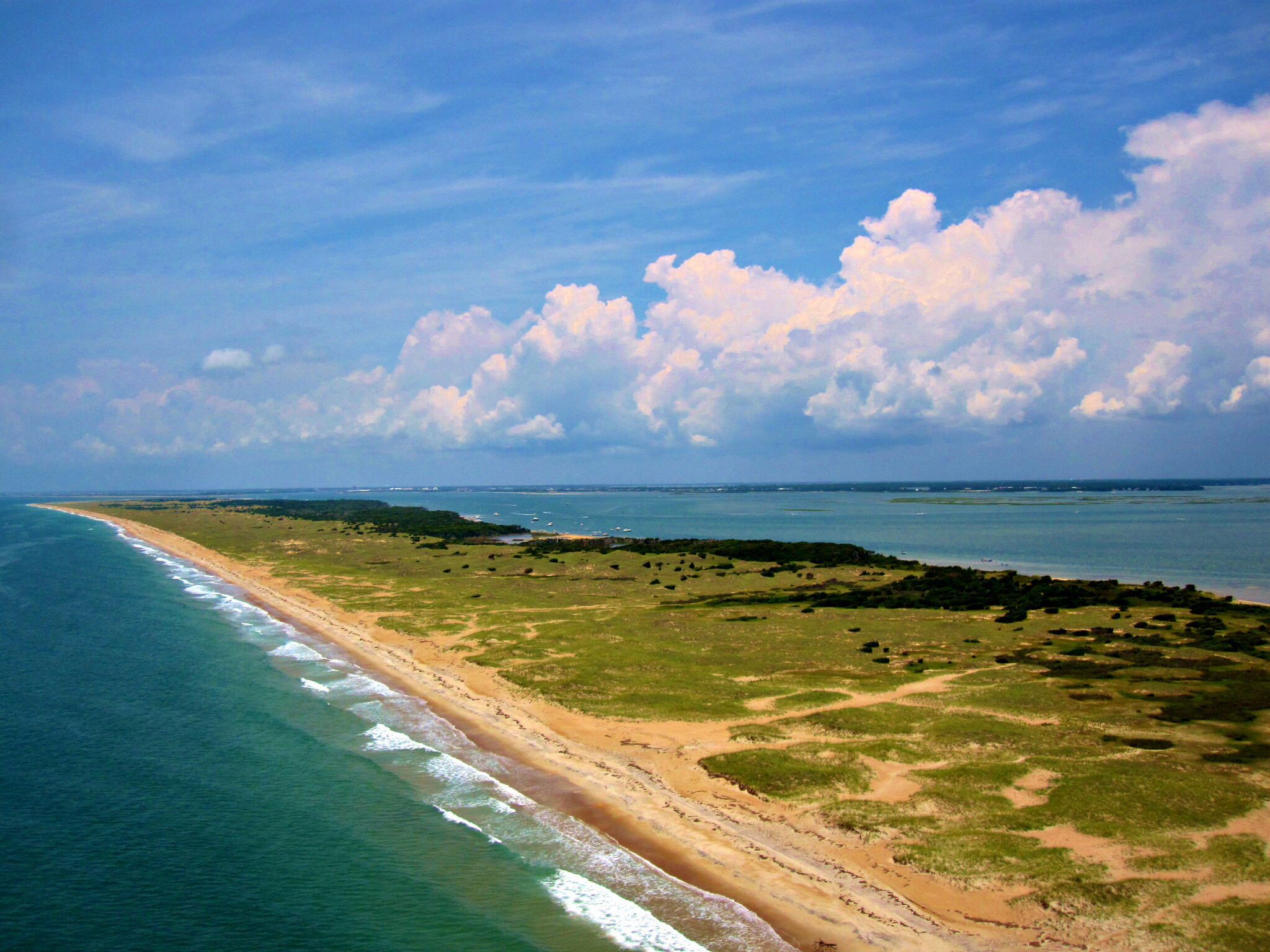
Southern side of Rush Island, Southern Core Banks
Story


do you know more? contact me.
The Nine Island Club | Built in 1905
Edwin Binney (1866-1934) acquired nine marsh islands totaling 100 acres due east of Shell Point on Harkers Island on December 21st, 1905. The deed recorded Jan. 4, 1906 documents purchase from Anson and John Gaskill and their wives of the lands granted them earlier by the State of North Carolina. The camp was constructed due east of Shell Point on the south side of Rush Island (the chimney remains, at this writing).
No current photo of camp is available except a 2023 photo of the chimney at the Rush Island site.
Binney won a gold medal at the St. Louis Worlds Fair for his invention of dustless chalk, but he is more known as the co-inventor of Crayola Crayons. An inventor, entrepreneur and community activist, Edwin also was an avid hunter and fisherman.
Born in Westchester, Conn., Binney bought a 1,300 acre plantation (“Binneywood”) in Carthage, N.C. A chalk mine was in the vicinity. Amelia Earhart, close friend of daughter Dorothy, visited there. While based in Carthage, Binney purchased the land on the Banks for his club.
(see Queen of the Air: A Moore County Connection—The Southern Pines Pilot— Bill Case, Aug. 5, 2018) and (Whistled Like a Bird: the Story of Dorothy Putnam, George Putnam and Amelia Earhart—by Sally Chapman)
In 1911, the Binney family began concentrating their time in St. Lucie County, Fla. where he helped promote Ft. Pierce as a port and inlet. He remained active more so in that setting from then onward.
Lambert Guthrie (1871-1953), as documented in Jack Dudley’s Carteret Waterfowl Heritage, served as “caretaker and cook until the club was sold in 1926 to W.M. “Will” Webb by Edwin Binney, Jr. (international swimmer and Yale professor) who had owned the property since 1919.” (A deed however shows that Webb, who had actually purchased the property in 1922, sold the club to “The Nine Island Lodge, Inc.” based in Forsyth County in 1926).
Dudley documents that the E. Binney Hunting Club was built in 1905 and that Lambert Guthrie (born at Diamond City) “served as caretaker till 1926 when Will Webb acquired the property.”—[the deed date is June, 7, 1922, however—Edwin and Alice Steed Binney had transferred ownership to son Edwin, Jr. on April 13, 1919]. “Spending every other night at the camp, Lambert also served as cook when the Binney’s or their guests were at the club (usually November and December).” Dudley also documents the generosity of the Binneys toward the Marshallberg community.
Wayne Davis shared information he had gathered from local contacts. Edwin Binney had “Lambert Guthrie as his first guide and keeper. Lambert was followed by Lenard Guthrie, Denard Chadwick, and lastly by Wiley Taylor.” “The camp burned “approximately in 1955.””
Jackie Booth remembers that the camp had burned to the ground leaving only a concrete foundation.
Neal Conoley, Jr. , in Waterfowl Heritage, records that “In 1939, the club became a membership association with owners from Winston-Salem, Charlotte, Morehead City and Spring Hope, North Carolina.” (this conflicts with review of deeds)
“In 1942, the association dissolved and the club became the “ Nine Island Marsh” according to Conoley. “The owners were Wiley Taylor, Blythe Noe, and Alvah Hamilton.”
Jackie Booth recalls that the camp structure, being then only a foundation where John Jones, Jr (his stepfather) and Wiley Taylor placed an old schoolbus atop of that foundation, windshield to east–door to south, and used this as a hunting camp. As a youth, Jackie hunted from this un-named camp.
The nine islands were: Cods Creek Island, Straight Marsh, Rush Island, Horse Island Marsh, Northern Deep Marsh Island, Gunning Hammocks Marsh, Cockle Marsh, Little Deep Marsh Island and Long Deep Marsh Island. Binney also had acquired 2 acres on Harkers Island.
Decoys
Two examples of Binney decoys—factory Mason brand—Nine Islands Club


Credits
- Wayne Davis–Harkers Island
- Jackie Boothe–Beaufort
- Other references within text