
Contents
Story
Decoys
Credits

🟡STRONG RESEARCH VOLUME
OWNERS
Fucher family —
(at least 5 generations)
1956
OTHER ASSOCIATIONS
Nick-named “the “Pilentary” by Clay, Jr.s wife
LOCATION
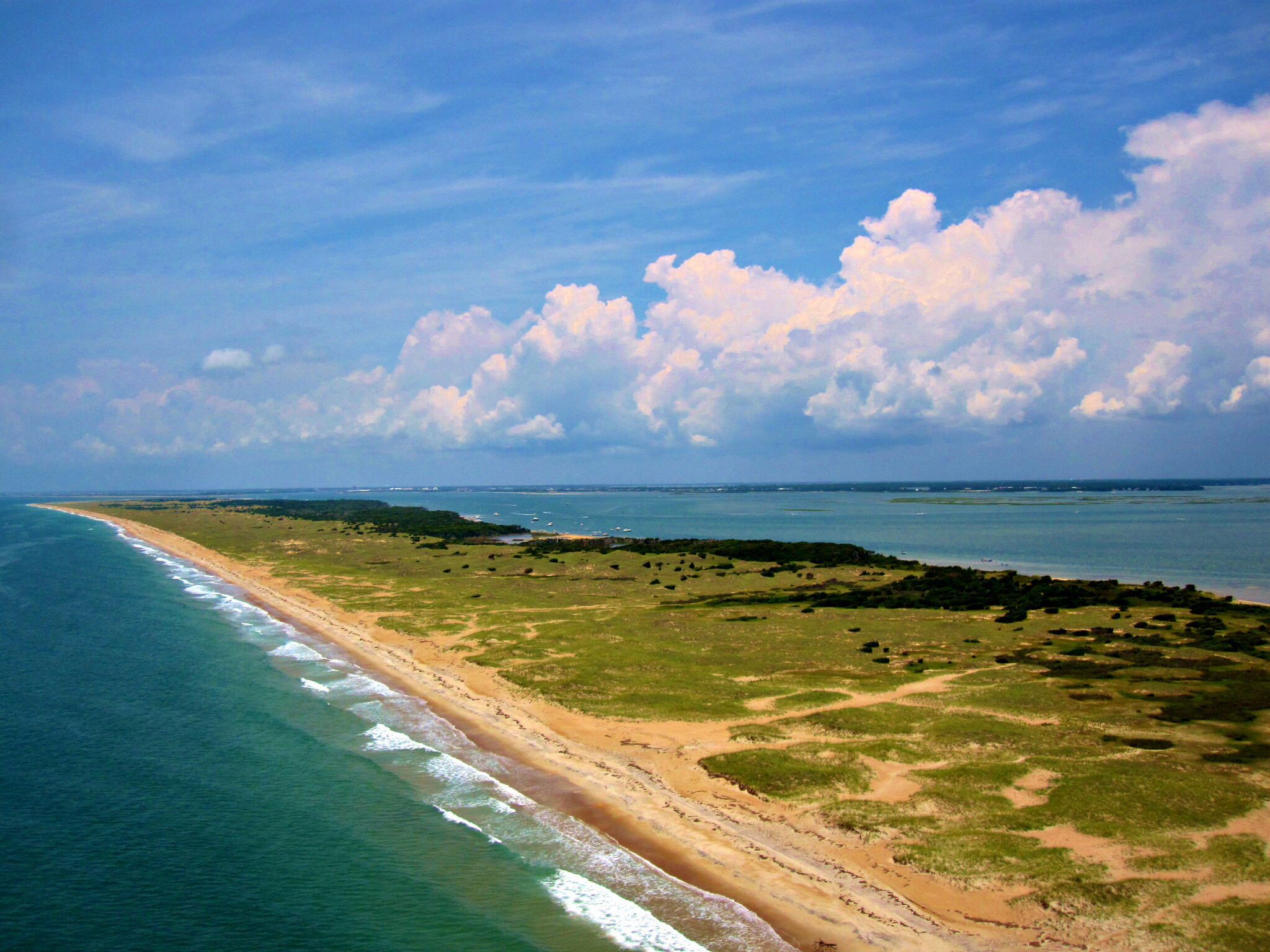
North Core Banks, north of Wib’s and a mile below prior Pilentary Club site
Story


do you know more? contact me.
Title
When the National Park Service was beginning plans and acquisitions for the new Seashore, Clay and June first thought they would just let the cabin go and not fight–but realizing their young children would miss out on their own rich Core Banks experiences, they consulted a lawyer and began a difficult battle to retain their status.
The lands under consideration had ownership rights extending back to James Mason and his 1859 land grants and rights to this land had never been sold off.
The camp was located about a mile south of the Pilentary Club site.
James Mason—Clay’s GGGF’s brother—had his home northeast of the Pilentary (in the Swimming Crrek area), from which he ran his schooner—“PaPa Jim” to Clay. James went to the Banks initially without ownership but shortly after obtained land grants there, paying 25 cents per acre. James and Belinda Mason’s house burned about 1876?, Clay thinks. They, then they moved to the Hammock House in Beaufort.


Clay and June were successful in obtaining a 25 year lease on their smaller camp to the south and lifetime rights for their descendants of the “Pilentary” property on the survey below.


The camp was built by Clay, Sr. and Clay’s uncle Harry Fulcher.
It was built out of debris from an old destroyed oyster-house.
They had it built in 1956–one mile north of Wib’s Creek and about a mile south of the Pilentary Club site, with which their family was heavily associated. Pike’s Hammock was the first site considered.
These lands had been owned by Jame Mason in the 1800s and had never been sold, so the family still had claims to it.
With the NPS takeover, the Fulcher’s had to seek a court remedy and protection, but they had good documentation and prevailed.


In 1981 to ’82 , the camp was rebuilt with 14 feet added to expand the kitchen and main room.


The had wildlife decorative paneling, wood stove, bathroom and shower, 2 bedrooms and room for boots and gear.


In the 70’s, access became more difficult and the camp was in increasing disrepair, prompting Clay and June to get their smaller camp at Wibs.
The “Pilentary” was a year round camp for fishing and hunting, but also family gathering and getaways
Clay hunted there with Jack Rose and Claude Brown of Marshallberg among a large cast of others–the camp was a resource to many.


A flagpole made from the mast of a Fulcher family vessel displayed national colors–a frequent Banks custom, showing owners were present and a national connection after the events of WWI.


This was a year-round camp for fishing and hunting, but also family gathering and getaways.
Clay hunted there with Jack Rose and Claude Brown of Marshallberg, among a large cast of others–the camp was a resource to many family and friends.
Beverly Taylor of Atlantic and Beaufort, relates her memories of frequent visits to the banks with Clay and June. As a youngster, she thought it special to hear a “shopping list” conveyed by raid to the mainland which was filled and brought by the men-folk after the workday ws completed.
Clay had a pet Bobcat that kept getting out and aggravating Atlantic neighbors–he caught it in a cast net and took it to the banks where he knew it could survive on ducks and game—he tracked it for a year, never seen but followed–Stuart Daniels saw it in his yard (after drinking beer)–told his son not to mention it for fear people would think he was drunk snd seeing things.
Clay Fulcher inspired and mentored me in this project of collecting Bank memories. His loss, of friend and mentor, left my presentation of this topic less rich due to the absence of his passion for preserving local history and perspective–but I also miss the time together with a friend..
Decoys
Clay did not carve decoys himself, but he did paint several “stick-downs” made by John Lupton


Credits
- Clay Fulcher, III–Atlantic
- NPS archives and files
- Other references within text