
Contents
Story
Decoys
Credits

🟡 MODERATE RESEARCH VOLUME
OWNERS
Wayne and Lana Davis
Wilford Dixon
built in 1971
1977
OTHER ASSOCIATIONS
camp #8 on 1977 NPS structure survey–then owned by Wilford Dixon
LOCATION
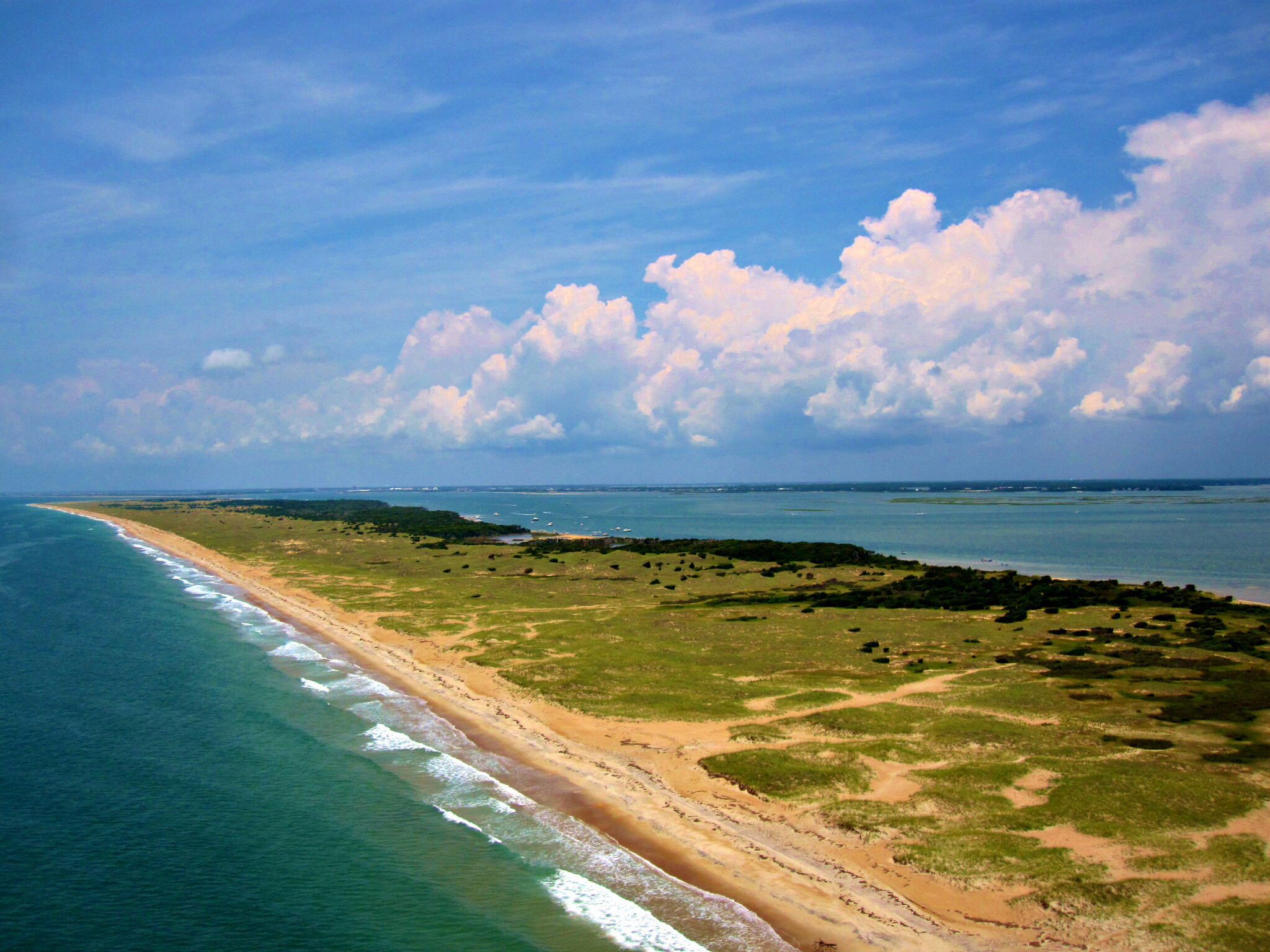
Shackleford Banks, east of the horse pens
Story


do you know more? contact me.
“The Sand Trap”
Wayne Davis interview:
Built in 1971, Wayne used telephone poles found on the banks for his pilings–including building the camp dock. The camp was positioned straight across from Harkers Island at a little high sandy hill on a point of land where water depth allowed a boat to come into the dock. He had found a little slew where he could bring his boat right in–later built a small dock there from the telegraph/phone poles on Shackleford left from wartime. Only one other unused camp was there at the time—”may have been David Yeoman’s camp.” Julian Guthrie was east of Wayne later. There was a path over to the beach.
The camp had a water pump which had a 5 ft pipe with strainer driven into the sand–it was “the best water-good water”. The camp had both a gas ice box and gas stove.
A 55 gal. drum served as septic from an inside commode—typical of many banks camps.
“It was too nice–wasn’t like camping, the comforts,”
There was no CB or communication—would leave wife and girls there alone and go to work. “My girls still talk about that–”
His boss, James Moore, had his earlier camp more toward Wade Shore–he owned a strip of land but when he built, he did it without a survey–when NPS surveyed, the camp was not on his property so he lost his camp. James Moore got married in his camp–Wayne was there as best man. They went to the camp every other weekend–alternating with his boss (James) at REA (the electric co-op).

Wilford Dixon from Portsmouth bought the camp from Wayne and had it the last two years before the takeover. Wayne had no deed or land ownership–it was known that the guy who owned the land (the Perry family from Kinston?) knew of the camps and never complained.
They had the camps for a “getaway” -for weekend or longer vacations.
Wayne, Lana and family had started by camping at the Cape in a large wall tent but that was a negative experience. Wayne’s family and Bill Guthrie’s family –who built next to him—(built just west of Wayne–higher up on pilings) had taken their families camping for 2 nites to the Cape–erecting large wall tents, they then unloaded rugs and furniture to fill the tents—it was uncomfortable cold that night and lugging gear to and from the weekend site made Wayne vow “ I will never do it this way again”–motivating the building of his camp. They called their camp “ The Sand Trap”.
There were more camps built there thru the years—4 or 5 east of the horse pens— plus the ones at the Bell’s Island area.
There were wild boar on the island–complete with tusks–one large red one (near Gherman Holland’s camp) interested Wayne-he baited it with watermelon rinds piled up and a rope loop–was able to catch his hind leg—fought him for an hour till he got loose and into the bushes.
In his younger days, Wayne, with his parents, spent a week each year at Ghermann Holland’s camp on the banks–”he was a big shot with the government” Wayne relates.
Wayne hunted a little but on Core Banks with Sylvester and Jamie Lewis–hunting out of blinds–one time at Turnigan Bay also
People had to watch their camps being burned–often they were there. “”They (NPS) had a good time burning them”—the bad part was that people had to watch them burn down
(Their (the NPS) joy of destruction–that memory–real or perceived–is a negative memory as told) by Wayne.)
“My girls talk about that now–say it was one of the best times of their life”. Lana would stay w/o telephone or boat at the camp as Wayne went to work in the mornings many times.
“NPS took it—but if developers got it, it would be like Atlantic Beach–now it’s preserved–got some good things and some bad things (meaning events and memories).
“Some of our best time.”
———————————–
Staci Davis Basden wrote of these childhood times –Core Sound Waterfowl Museum and Heritage Center, June 13, 2022 Education Newsletter–presented with her permission:
CHASING FIREFLIES
One of my fondest memories as a little girl is running barefoot through the sand on Shackleford Banks, especially at night. Nighttime marked the start of a pastime enjoyed by my sisters and me for it was at night the skies lit up! As magical as a fairy tale, among the clicking cicadas and ribbiting frogs appeared brightly blinking curiosities. Our parents called them fireflies, but they were lightening bugs to us.
So, rigged with glass mason jars with lids that Dad had twisted and pushed an icepick through to allow air inside, we three adventurers headed out into the night. Our destination was always the sandy-walled dunes. Once there amidst those hills, we slowed our pace and became as quiet as possible. Our heavy running strides instantly morphed into dainty tiptoed marching. Creeping through the darkness with high, slow steps, we kept close together with our eyes towards the heavens above.
We inched through the sand, occasionally stepping on a shell that would cause a silent gasp and squinched-eyed grimace, but nothing could stray our focus from our mission. Then, every time startling us a bit, it began; lights flickered rhythmically around us producing a lightshow like no other.
My sisters and I giggled as we would try, try, try to capture our lit treasures. We swung our open jars through the air up, down, and all around. We helped one another, well, my sisters helped little ol’ me, achieve success. After filling each jar, we sang and skipped with wide-faced grins back to our camp with nature’s night lights glowing in our innocent hands.
Laying in our bunk beds with a salty breeze wafting through open windows, we fixated on the blinking lights beside us, our personal Diamond Ladies, until sleep rested upon our sunburnt faces and closed our tired eyes. Waves rocked us in our sleep as we dreamed of another day like we had just experienced. And, yes, Mama released those fireflies as we slept knowing full well that her little girls would be on another hunt for them soon.
(see also Wilford Dixon’s camp page)
Decoys
Wayne’s canvas goose was one of his first rig as a teenager.


Credits
- Wayne Davis–Harkers Island
- Staci Davis Basden, Chasing Firelies–CSWM newsletter
- Other references within text