
Contents
Story
Decoys
Credits

🟡 LARGE RESEARCH VOLUME
OWNERS
Theodore Rogers
1885-1903
OTHER ASSOCIATIONS
Pilentery Club, James Mason, Jordan Mott, the Mason family
LOCATION
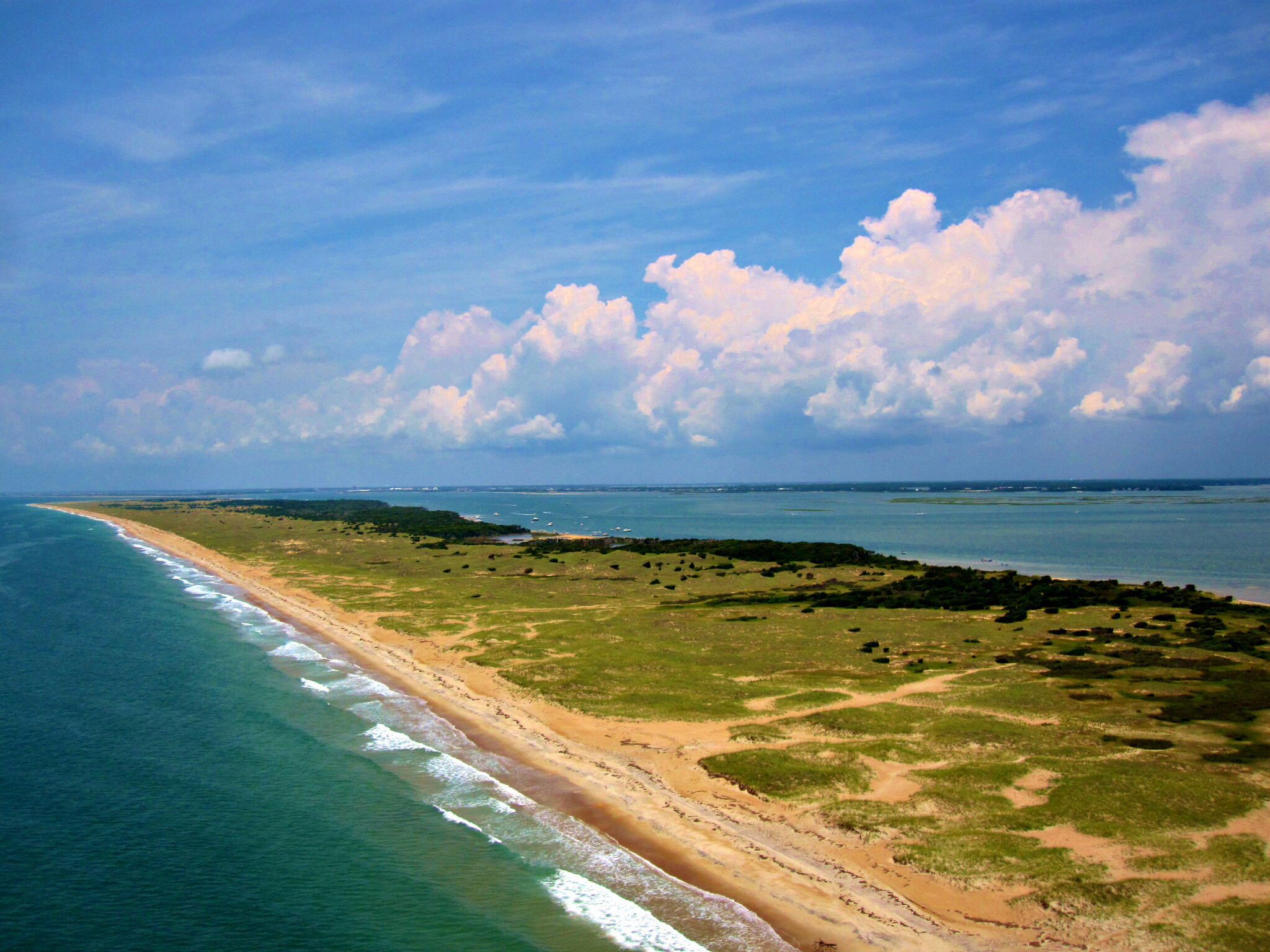
North Core Banks, the Pilentery and Pike’s Hammock
Story


Title
Theodore Rogers (1831-1903) of Jamaica, Queens, N.Y.—was President of the Bank of the Metropolis in Manhattan. Rogers had risen through the ranks of commerce before entering work for the bank. He was never married. With broad interests and memberships in several organizations, Rogers found escape as he hunted on Long Island, the Currituck and Core Sounds and fished along Core Banks.
Rogers kept a sportsman’s log of his hunting and fishing adventures. This and other archives reside in the Queens N.Y. library.
His log begins recording travel to and hunting on the Currituck Sound, N.C. in 1869-1871. The home base for hunting shifted, at least by 1885.
Nov. 1885—“We are making preparations to spend the most of January on Core Sound….
—that is Oakley Nostrand and myself and possibly Rodman. Have forwarded plans to James Mason of Beaufort NC for a shanty to be put up on the Evergreens—anticipate a good time in getting ready as well as the shooting when we get there.
After a long preparation and getting…?we started for Core Sound January 8th 4pm…
in the late 1800s, Rogers purchased twenty tracts of land on Core Banks. The largest tracts came from James Mason and family (well over 400 acres in just one tract). One tract was acquired from Wm. Skidmore. Rogers had a Skidmore as frequent hunting buddy –suggesting to the author that Skidmore may have led Rogers to the discovery of Core Banks.

Images attributed to the Pilentery (the drum in hand and the fence behind -match the setting—(from Queens Library archives)

Channel Bass (Drum) and Sheepshead were seasonally sought.

Identification of individuals in the photos were not included.
Travel took a commitment:
Nostrand and I start this afternoon on the 2:10 train— for Morehead City—Went to Baltimore by rail, took one day—leave from there to Portsmouth Had a very pleasant trip down time Chesapeake with moonlight night. Reached Portsmouth in good time -the morning off the 25th Saturday time to take the Seaboard and Roanoke to Weldon then changed there for —Goldsboro, on time—left Goldsboro on the train to Morehead City reaching there about 800 having so few places to stop was ahead of time—had to slack up so as not to go in ahead of time-Found Captain Mason there with the sharpie with a cabin on to take us over—reached Miss J. Davis place about 9:00—had a very good meal and retired about 11:00—The wind was southwest with very —-?of its blowing from the same quarter in the morning
(Oriental and Ocracoke were routes used at times).
—May 25, 1890
got up early and had breakfast each for a good start-Wind moderate but favorable. West quarter pleasant Tide up so that we could go through the inside way (creek)—got about half way through the creek—had to jibe sail—the boom struck the top of the cabin and broke short off —We spent half an hour in splinting it—the wind was fair we managed to get along very well
In the meantime, Jennings overtook with the sharpie that Capt. M had hired to sea for the time we were at the Banks— and that gave him so much of a start that we never caught up to him again till he stopped at the Hunting Quarters which enabled us to reach the Pilentery between 2 and 3 oc making good time.
Weather exerted her forces:
Feb 8, 1895—sharpie frozen in at anchor—temp 18-23 to 32 max—
23 in the dining room—oranges and apples became frozen—pulled the table close in front of the fireplace—had to thaw out the fruit in front of the fire—
Feb 9th /Saturday—a sharpie (that was to carry our birds to Beaufort) came to shore covered in ice and the crew of three white and one colored men looked “very blew and cold and very hungry”—each got a good drink of whiskey /fed and given coffee and tea—fixed into beds and took care of them till Sunday—they started to walk to the lighthouse about 40 miles away—carrying the colored man the last 3 miles—
—we had to help several other parties get on their way home who had walked ashore from their boats leaving the boats in the ice—one had broken through the ice and was quite badly frozen

1902 entry—Roger’s Decoy Rig—873 of them—and—additions to the Pilentary: kitchen, bath room, sleeping room and other room. Snipe, Yellowlegs, and other shorebirds were hunted on the Banks and in Long Island.

Captain James Mason and his family supported every facet of of visits to the camp/cottage/club.


1901 entry—“succeeded in driving everything out of that part of the sound completely”—
324 birds “snipe and all”/ 22 geese—the balance -“redheads, brant, BBill and Blacks”—left for home Feb. 8th
——-“Restorative—“quite under the weather” when we arrived—
“When I reached home, I was a ready for business and have been in much better health than I have been in quite a while—-Pilentary seems to fix me up every time in good shape”


Decoys
The presence of both Mott and Rogers markings indicates that at least some Rogers decoys were conveyed to Mott with the property.
Two examples of T. Rogers rig decoys–Redhead -larger photo above and two below- by Ben Salter (courtesy of Henry Kidd) and decoy with wooden keel (photo courtesy of Robbie Smith)


Credits
- Decoy Magazine–The Rogers Rig–May/June 2003–Francis D. Murphy
- Archives, Queens Library, New York–where many T. Rogers papers are stored
- NPS files and archives
- Jack Dudley’s book–Southern Outer Banks–holds additional photos and content
- Other references within text