
Contents
Story
Decoys
Credits

🟡 LIMITED RESEARCH VOLUME
OWNERS
Dickie Styron
Charlie Alligood
built in 1962
OTHER ASSOCIATIONS
Elizabeth Styron Ritchie
LOCATION
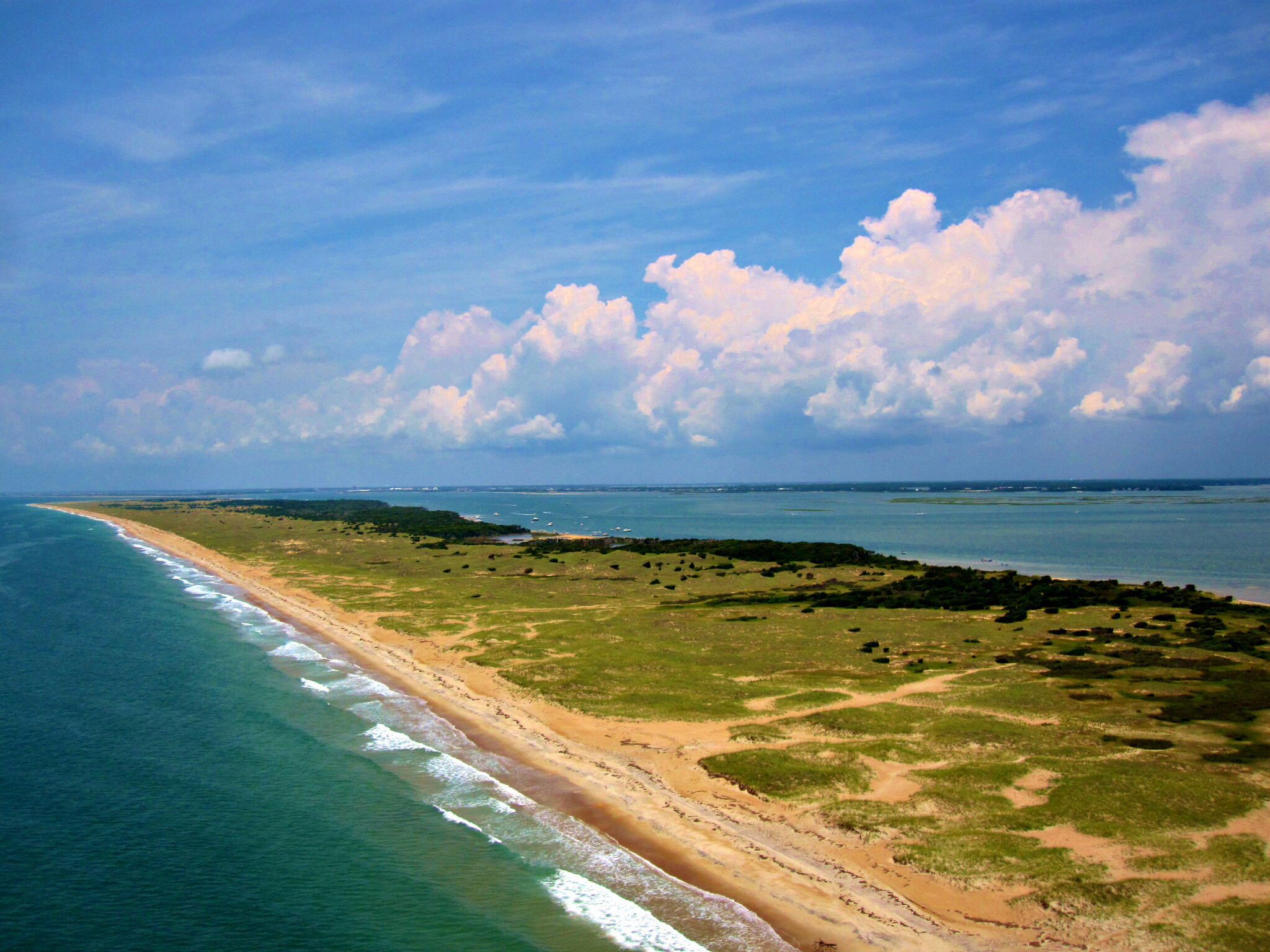
Johnson’s Creek, Southern Core Banks
Story


do you know more? contact me.
STYRON-ALLIGOOD CAMP
—CALO interview 8-22-11 of Elizabeth Ritchey
CHARLIE ALLIGOOD
ELIZABETH ASTYRON RITCHEY
DICKIE STYRON
CM: Besides using Core Banks for a livelihood, you all used them for recreation.
ER: Oh, yea. Now, everybody seems to have a second home in the mountains or they’re going to Florida or somewhere for a second home but Core Banks right across from Davis was our second home.
CM: You had a camp there.
ER: My daddy built the camp. He had a friend Charlie Alligood that used to build boats which was known as Alligood Boat Works. He built yachts down on the shore in Davis. My son now has his home where that business was.
CM: Which son is that?
ER: Lester Allen. We feel very honored to have claim to that property and know what was there before.
CM: Absolutely. Your camp, can you describe it for me?
ER: I can. It was built I think in about 1962. We were so excited. I can see daddy and Charlie just putting that lumber on the boats and taking it over. It had a cinder block foundation, like little pilings, it wasn’t a solid foundation. You go on the porch and you go in the front door. It’s what we call a great room, now. The kitchen, and the dining area and the sitting area was all one. Then it had a bedroom on the east side and one on the west. In one end we had a double bed and then we had some bunk beds. It was beautiful. I learned to drive on Core Banks. My brother, Dickie, I can see him and Kenny pulling Patty. Their livelihood was like getting the hood of an old car and tying it to their car and they’d pull each other around on the hood of the car, towing it.
CM: Sort of a bobsled, a sand sled.
ER: Exactly right. It was such a beautiful place to grow up and just feel God’s blessings and grace. We could just get up mornings and if you felt like grabbing the clam rake, we would just get the clam rake and we’d clam in Johnson’s Creek. We could look out the window and see the mullets jumping. Then we’d all run and jump in the skiff and put that net over, go to our necks sometimes pulling in those fish.
CM: You mentioned Johnson’s Creek – was there a Shingle Creek? Was the camp located between the creeks?
ER: In the early years…actually our camp was located right on Johnson’s Creek. But in the early years, I’ve been told, they used to soft crab in there. The men from Davis would go to Johnson Creek and they dug out another creek called Shingle Point Creek. It ran parallel with Johnson’s Creek.
CM: So that was not a natural creek, it was dug out.
ER: It was dug out. That’s correct. It was such an abundance of clams over there. If we just decide we wanted clams for supper, so we’d just go.
CM: Were you signing? Or were you raking?
ER: Oh, yea, we could sign. Oh, man! [Laughter]
CM: They didn’t have a chance did they?
ER: No.
CM: So, how did you fix them when you got back to camp?
ER: We did clam bakes. I just can remember, Connie, seeing this tub in the night; that would be our snack. We would have those little cherrystones and we would put them in a pot and steam them and just melt that butter and set there and play little games around the table and eat clams to no end.
CM: Did you have a cistern over there? Did you have a pump?
ER: Yes, we had the whole nine yards
CM: So you collected rainwater.
ER: Yea, we had a shower and in fact we had a bathroom in our house. CM: You had a flush toilet?
ER: Yes, we did.
CM: Really?
ER: Yea, we were uptown, Connie!
CM: You were. I got to over there one time. I don’t know if you were over there or not but I was so young but I remember Dickie and I got in a car and we drove about 5 miles down the beach and the darn thing broke down. We did not have one glass of water between us. That was the most valuable lesson I got. I said, I will never go to Core Banks without water. [Laughter]
ER: But breaking down was always a problem because the cars you carried over there were older cars. Pulling in the sand, sometime they’d run hot. If you got broke down you’d just have to set until it cooled off. Hopefully to have some water to fill the radiator up again. It’s happened many, many times.
CM: He had the most fun. It had one of those gear shifts on the steering column.
ER: When my babies came along, I remember having a full size crib in that bedroom and I’d put those little babies to bed and I had a mesh net that was made just for a
ER: crib and I covered the crib. They’d sleep all night. To think back on it, Connie, it’s a Down East word that I’m sure a lot of people have heard, when you really get to thinking about it, we were mommicked. Because there were many a morning
about daylight the mosquitoes would just hit or the gnats. You in that cabin with no air condition and they come through the screen like whatever. I still remember, we had that little Flit gun and we’d put kerosene in it and fill the windows full and wet them down to keep the gnats from eating us up. Many a time I have laid in that bunk with my head covered up so they would not get in my hair. We called that fun! [Laughter]
CM: Did your daddy or mother do any hunting over there?
ER: Oh, yea, they hunted and fished. In the fall of the year, oh my gravy, you could just see them coming from Beaufort and they’d go jump in that boat and head to Core Banks to get over there on the shore to fish.
CM: Did they have a stake blind or did they hunt from the shore?
ER: My father, in his later years he didn’t hunt that much, both my brothers did. My sons grew up and they still do that. They have a stake blind.
CM: Is it right off where your camp was?
ER: No, it’s further down. Now, you have to get permits from the Park Service. They have areas were you’re allowed. They get a permit now to do that.
CM: Now, the camp, when was the heyday and when was the last year you were there?
ER: The heyday, when I think back on it, when we had ours on Johnson Creek we had a little village. There were so many little cabins all built right around us.
CM: Tell me who some of those people were. Do you remember?
ER: Yes, I do. The Mundens, from Morehead City (Munden-Taylor camp near Marvin Murphy camps–authors note) that owned the funeral home, David Munden and Mildred. Marvin Murphy was always there. He was the camp owner. He would bring the fishermen over. We met so many wonderful people through the years who just loved to fish. It is an area that is so unique. And it is still almost undisturbed. When you go to Core Banks and this part of the world, you are away from reality.
CM: Oh yes. When you go there and you can look both ways up and down the beach and not see a single soul. That is wonderful and so unique.
ER: Exactly.
CM: What happened to your camp?
ER: The Park Service and I don’t remember the year, you would have to research that, decided to take complete control of Core Banks and that’s when we had to give it up and we did it with reluctance.
CM: I think everybody did. It was a way of life.
ER: It really was. It was a way of life. It was eventually just torn down by the Park Service.
CM: The Park tore it down. Did you take some photographs inside?
ER: I do have some.
CM: I would like to copy some if you don’t mind. That would be great. Did you name your camp any special name?
ER: No, we just called it the camp.
CM: Just called it the camp
ER: We’re going to the camp.
CM: What kind of boat did you take over there?
ER: My daddy had a boat and then when I graduated from high school, I decided I wanted my own boat. So, daddy got me one and when I got ready to go, I went and got in my boat and I just went over.
CM: Was it a wooden boat?
ER: Yes, it was. Lapstrake.
CM: Lapstrake with a little outboard?
.
Decoys
Two examples of Binney decoys—factory Mason brand—-Nine Islands Club
Credits
- NPS files and archives
- CALO interview–Elizabeth Styron Ritchey
- Other references within text