
Contents
Story
Decoys
Credits

🟡 AVERAGE RESEARCH VOLUME
OWNERS
Ross Salter
Bobby Hill/Bud Hill
Date ?-1985
Date 1985-current
OTHER ASSOCIATIONS
Berkley Machine Works and Foundry–Sam Jones
LOCATION
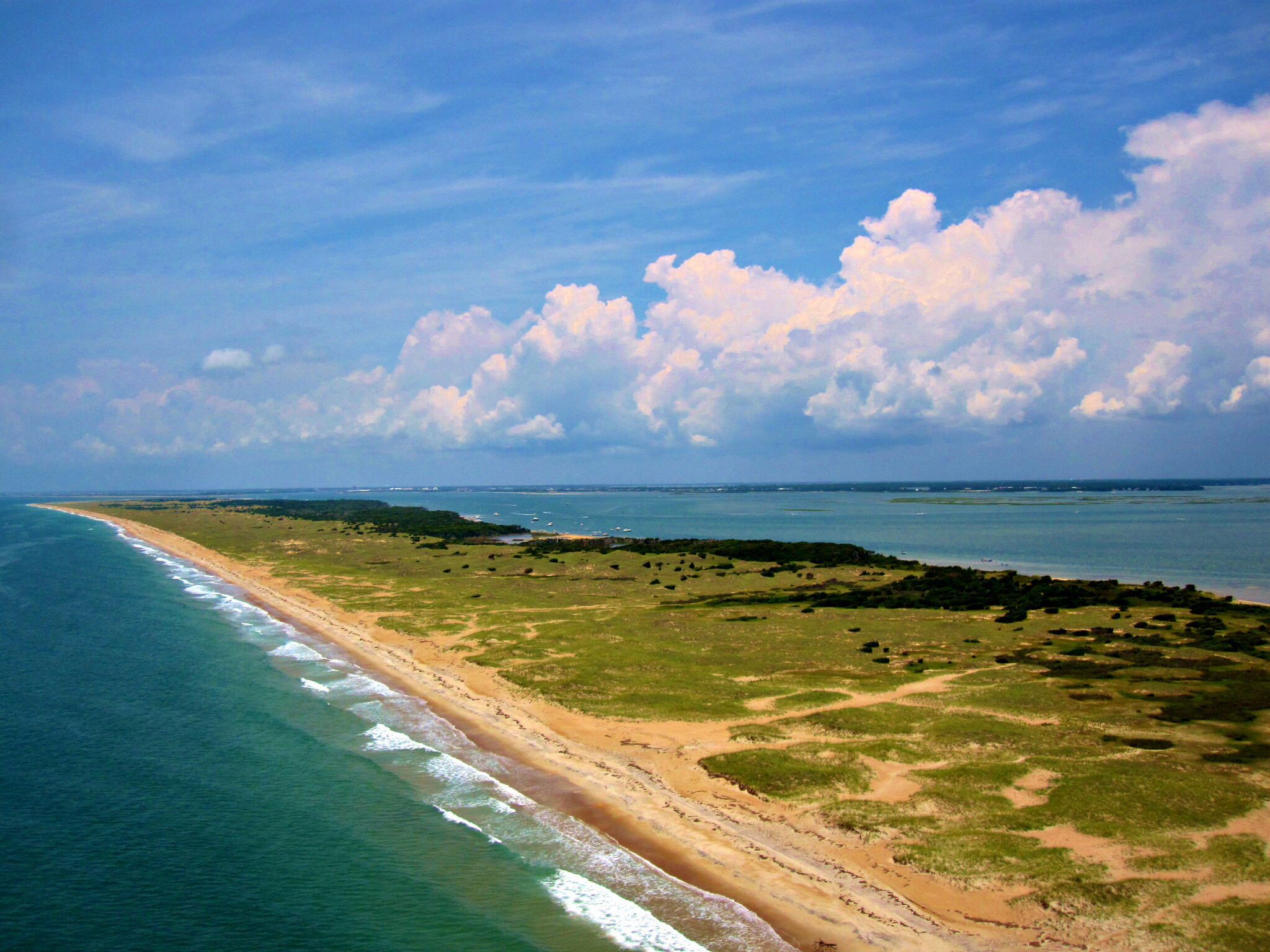
Northern Core Banks, Bay Marsh or Fred’s Creek–northern Sheep Island
Story


do you know more? contact me.
Ross Salter, Bobby Hill Camp–
Ross Salter was the son of John Wallace Salter, who sold property to the Battle brothers for establishment of their camp. John and others from the family kept their attachment to Portsmouth active as they “commuted” from Atlantic to work. Ross established a camp on the north side of the creek (Evergreen Slough. Fred’s Creek, Bay Marsh Creek —varied names) bounding the north side of Sheep Island. Ownership passed to Bobby Hill, at Ross’ death.

Ross Salter interview– (excerpted)—CALO Oral History Project
—born in 1912
—parents moved to Atlantic about 1920-1921 (Ross was in the 3rd grade—53 kids enrolled in Portsmouth school when Ross started school.)
—went back in the summers for several years
—after quitting school, “worked down there full time”
—father “commuted” between Portsmouth and Atlantic—“coming home on weekends”—fished, oystered, crabbed—some gardening (unsuccessful)
-45 head of sheep when Stock Law went into effect— for shearing and mutton
-stock pennings—May and June—cattle, calves, horses—if planned on eating beef, would pen them 4-5 days to feed and water them, before slaughter
-pens located in middle of island (north of The Sheep Island) and also near the house (150 yards square)
-dipping vat there in the late 20’s also
“Nobody on these banks made their living just on stock”
“Somebody would kill one and I don’t think they’d sell it. They’d give it away mostly.”
—“the crowd of us, the Salter boys, had cattle and horses too. We sold them and made money off of them…no big lot, just a littler bit of income.”—“we were the only ones to work with stock for the last 20 years——helping augment income
—we had the only boat that was around—“The Pearl”—it was the “Dolly C” to start with—we had her rebuilt and called her “ The Pearl.”—“and we moved just about everybody from Portsmouth.”
—freight—worst part of it—getting it ashore–didn’t have much water around Portsmouth
Ben Salter used to haul with oxen—hard wood, etc.
—did haul oysters first one place then the other
—I run the mailboat sometimes
-carry passengers?
Taking out hunting parties. Meet them here (in Atlantic) on Sundays. Carry them back when they got ready to come. Two or three days later.”—I operated the boat 9 years straight, dad did some but less
—-in ’36, sold it and bought another one 54 foot in lenght—operated it for 9 years—I rigged it for fishing and shrimping.
—moved nearly all of them after the ’33 storm—not many before
—well, they (people on Portsmouth) wanted to get away from there because they lost what they had to work with—skiffs, motors, sail skiffs, decoys and nets of all descriptions—all the stuff, or the biggest part of it went into the ocean.—lost decoys, nets, oyster tongs, clam rakes, gigs, oars and stuff like that—was gone—“it was a job to get back to work and make a dollar”
—There wasn’t but about 4 or 5 families stayed after the “33 storm
-delivered wood to the CG Station after the ’33 storm
-?reasons for working on the water:
—start oystering the last part of Sept. or ther first part of Oct.—oystered then till the 15th of March—and start planting oysters till 15th of April—the state would pay you so much a bushel to plant oysters-—then went clamming from May till September—they didn’t do that steady because there wasn’t no market for clams
—most of the time, there was a market for fish in the summertime—they would start setting nets in September, took them up in November
—then, there wasn’t much to do but oystering till March—
—they would either take out hunters or go oystering—course my father took out hunters and would go oystering too.—sometimes he would do both—if the hunting was right near an oyster rock—while he was watching the hunters
—my brother used to trap some mink—never caught otters, not around—they would ship the hides somewhere to sell—that wasn’t a way to make a living
—flounder didn’t sell, but you’d get what you wanted to eat.
—making whiskey on Portsmouth—No—made a lot of whiskey around Harlowe—sometime somebody’d come down in a boat and have some to sell
-??when hunters started coming to the island?————
—they’ve been doing it years before I was born—“
My father talked about them coming when he was a boy.”
-My dad left Portsmouth after his brother Dave Salter died—they used to run around togeher
-Sam Tolson—hunter’s would come down here and want to hear him (tell his stories)—the Coast Guard would look after him
——Carrying hunters—why we put some into just about every creek. so if I was waiting on somebody and I could get away from them, about a mile or so, build me a little fire—roast me some (oysters), or take some home.
“it wasn’t too prosperous around there when I was growing up—….but a good place to live”
-Cut wood as a child’s chore—open oysters and clams, clean fish, peel irish potatoes, wash dishes—worked as “mess boy” for quite a while————
—-“Father took out hunting parties. I had to cook when I was here in the winter time.”
—when I got big enough, I’d help him hunting. Managing decoys. Pick up fowl.”
—some of the hunters had just saved up for a vacation, some of them were rich
“Bad weather is the best time for shooting ducks and geese.’”
-Batteries—sink boxes—-It was a big job setting it (sink boxes) out and taking it in every day—
Put battery across a skiff and put it out (on sites) where ducks and geese used. Put it (battery) wherever you wanted it. On a shoal.
—4:30 is when they started with puting out the battery—have it set up by the time the sun rose.
—got a man in it, got it to set just like you wanted it.
—balanced it with iron ducks—put your decoys out—
—some set on the battery—others set out further
—It was a good way to kill fowl.—-course, they outlawed that.
You had to go pick up whatever they killed—a sportsman probably had his shoes off—had to go pick up everything he shot.—stay a distance away from him, wouldn’t bother the game coming to him.
We started using stake blinds and hunting off the marsh. Outlawed batteries when I was quite young.
Used about 400 decoys—wooden, iron and live.
—made wooden decoys ourselves—I helped make them
Wash Roberts (was the) best decoy maker. #1 jack of all trades and as nice a fellow as you ever met—made them, paint them, put eyes and anchors on to them—Decoy maintainence
Used live decoys at times till it was outlawed. We had 75 live decoys at one time—anchors for live decoys—used 8-10 decoys around the blinds, sometimes just 2 0r 3. Depended on the weather and how you felt about it.
—kept decoys in a pen, ran wild after season was out—turned them out when quit hunting
—They would stay around, feed on the grass on the shore—some(folk) could tell whose geese was whose by the shape of their hesd but they’d mark them—cut the toes, webs—each fellow had a different mark
-guide rates $10-15 per day—big money back then
-Bad weather and nobody to take out—we went ourselves.
-Took hunters in/boarded them—( the Salter family were the only ones that boarded and guided too)
-Tending to hunters but not boarding them:
Tom Bragg and Julius Styron
Mylan ??
George Gilgo
—Norman Roberts
—Will Willis
—Henry Piggot
—Ed Dixon
—quite a few different others (if they wasn’t doing nothing most anyone would wait on them)
2 fellows could take care of 4 men—2 in each blind
Uncle Dave Salter had the first motor
–locals did long hauling//set nets–people didn’t shrimp back then
some boats were built on Portsmouth —some bought—Dave Salter built some/ as did Wash Roberts (2 or 3)

Ross Salter camp–from the Lionel Gilgo, Jr. scrapbook.


Repair work was always needed, as expected.

————————————-


Rudy Austin pointed out the rebuilt camp of Bobby Hill/Bud Hill which had been ravaged by storms.
Rudy Austin related that Ross once sailed his skiff to Cedar Island using only a sheet of plywood for his sail.
Story
DO YOU KNOW MORE? CONTACT ME.
.
Repair work was always needed, as expected.
————————————-
Credits
- Other references within text
- Photographs courtesy of Jim Davis, Ken Brennan, Davis Springle and the author
- NPS archives and documents
- Lionel Gilgo, Jr. –scrapbook

About The Cabin Culture of the Southern Outer Banks
A research effort to uncover and preserve the history of cabins, cabin life, and the owners/families who lived and played on the Southern Outer Banks from 1900-now.
Blog Research
As more updates are posted, you’ll be the first to know about it.
Type your email…
Keep me posted
