
Contents
Story
Decoys
Credits

🟡 MODERATE RESEARCH VOLUME
OWNERS
Frank Nelson
Monty Nelson
built in the 60s
OTHER ASSOCIATIONS
Joe Fulcher
LOCATION
North Core Banks, Wib’s Creek (Wilbur’s Creek)
Story


do you know more? contact me.
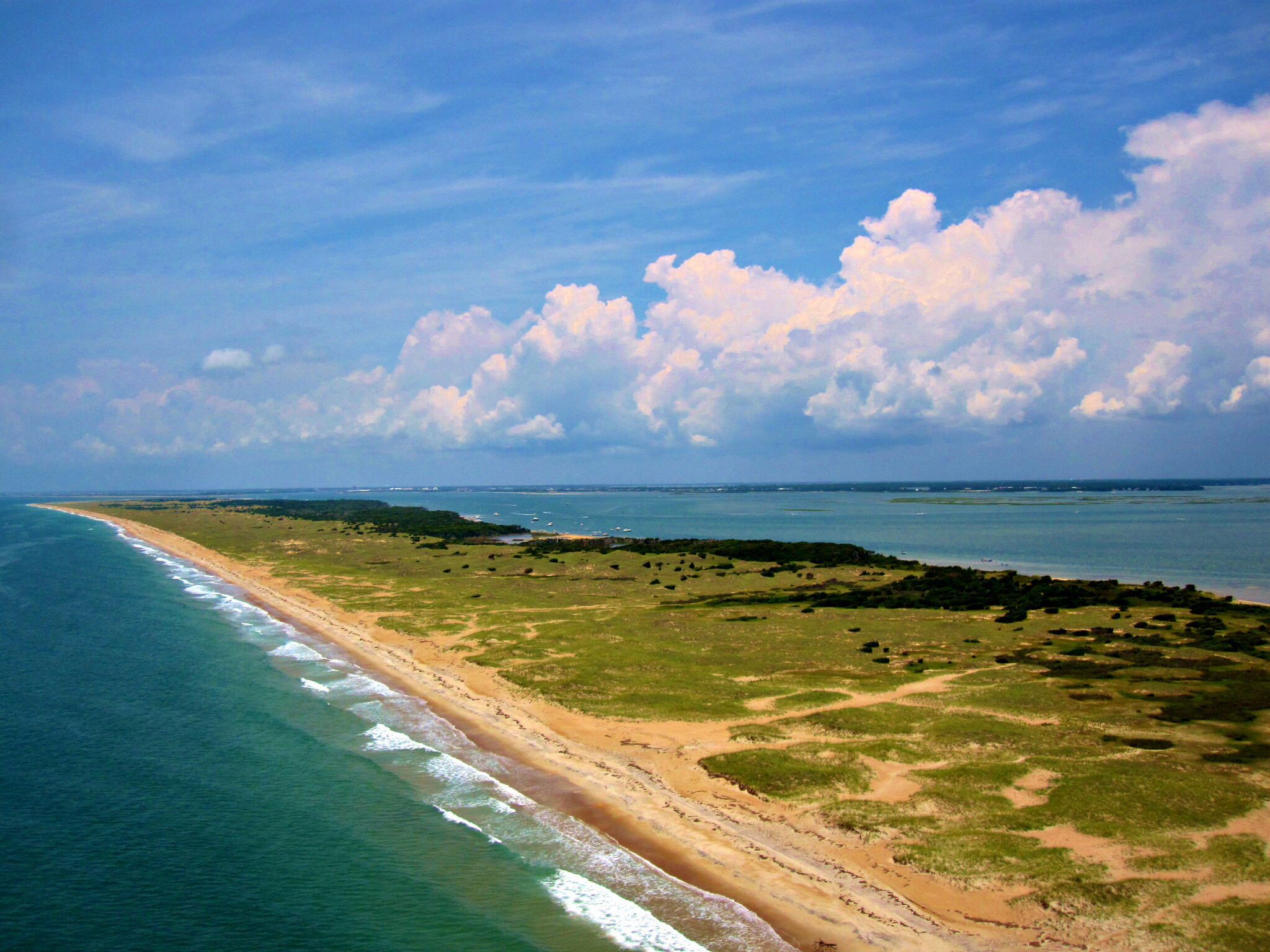
Frank Nelson Camp
(in photo–in the top right corner)
FRANK NELSON
MONTY NELSON
JOE FULCHER
Frank was a fisherman–a “progger”–from Atlantic.—(Joe Fulcher interviews)
The camp was built from debris of a blown-over building that had been one of Wilbur Nelson’s camps. According to Joe, the structure had blown over onto its side and into the marsh. Being resurrected, it was placed up on pilings and refurbished. The camp was owned by Frank, and used often by Monty, other family and friends–especially for hunting. And for fishermen, as Joe Fulcher relates, they saw it as a place of refuge for bad weather –if foul weather made it difficult to make the 18 miles to harbor, they could pull in and wait out conditions–therefore, adding the camp’s purpose as a harbor of refuge. The camp was also for family enjoyment, though Joe relates that the women did not come often due to the primitive nature of the camp. In summer, they would mullet fish, associate with people (more than with their neighbors in Atlantic, (which the other cabin owners were), visited each other—- a get-a -way (just like the youth going to the Life Saving Station).
DANNY DAVIS——–and wife—(family of Avon Nelson, who had camps down toward the CG station and Don Morris Camps) loved to go over to ther banks camp to fish, ride four-wheelers and get away–even though he worked on the water.
Joe had been going to the Banks since he was 8 years old. Joe had been wanting to go hunting on the Banks with the family men –especially, their annual hunt when they arose from the Christmas meal and headed to the Banks where they stayed till New Years day. At 8, Joe got a BB gun and was told he could go along–he had a 410 shotgun but they wouldn’t let him loose with it yet–although, he did get his first duck that hunt with his .410 with adult supervision.
At that time, the family hunted from uncle Avon Mason’s camp (Mason Kabin Camps). The Avon Mason camps were filled during fall fishing season— he had 4-5 camps for rent. Joe’s dad had the same birthday as Monty Nelson (Joe’s mother’s brother)- and they were close friends, almost like brothers. Monty told little Joe that he knew where there were some ducks and took him off to a marsh blind–he told Joe, “when I nudge you in the chest, shoot”—Monty had told him to keep his face down till ready to shoot, since it would shine “”like a light “ in the twilight.—-
—-Yes , the area was baited–three black ducks flew over, circled once–Joe didn’t shoot–Monty asked why—”I was waiting for them to land so I could get all three”, said Joe–Monty told him that if they returned, he should shoot when told to–the ducks returned and were coming in about head high–on the nudge, he rose and got a bead on the first and shot–the third trailing duck came down–not having led the first ducks flight.
The next year – at 9–he shot his next duck, his first Redhead.
At 14-15 years, he got his grandfather’s 12 gauge from uncle Aulbert When he pulled it out of the closet, “I was some kind of disappointed”—”there was no railroad track in the state as rusty as it”. It wouldn’t break open. Joe took the barrel off and soaked it for a week in fuel oil to work the rust–and did get it working and ready for use– but tied it to a tire to fire it the first time to see that it would not explode. Joe hunted with a plug tied to a cord around his neck–so it was quick to put it in the gun if rangers arrived. Black duck then were oft called Canadian Black Duck and had prominent red legs and looked different from todays fowl.
Avon’s camps were just north of Drum Inlet–and further north was Billy Smith’s camp (which had a bathroom–a thing of distinction), and next north were the camps of Ira Morris (Morris Cabin Camps).
Frank and Monty’s camp at Webb’s was salvaged out of the marsh, a hurricane had rolled it over into the marsh– they got it up on pilings –was 8×12 initially–would sleep 6, with 3 bunks along each wall—-they had 4-5 blinds–every camp had its own set of blinds–further out, folk from Cedar Island had stake blinds in water too deep to wade—-there were marsh blinds, stake blinds and point blinds–using whichever had favorable wind, tide and conditions for the time.
Point boxes or blinds were set into the marsh at a point on the creek shoreline–some dug in and some up on pilings, depending on terrain. One blind was an oil barrel with the end cut off and buried–2 hunters could just get in–had to bail out the water in the bottom at start of the day–concrete was poured into the bottom to weight it down and prevent it from floating up . They threw fertilizer around it in the spring to promote growth of grass and coming back had difficulty finding it in the overgrowth–fearing stepping in or falling into it.
Different birds came to different blinds–marsh and point blinds –better for sprig tails, black duck, widgeon and some mallards, occasionally green-winged teal.
Stake blinds more for redhead, blackheads and others.
Rig size varied–needing just a few for sprig tail and marsh ducks.
lThe largest rig used was 75 geese and 180 redhead decoys –used on Carey Slew-near Billy Smith’s camp. Carey Slew (slough) was north of Ira Morris camp and south of Swash Inlet. Brants were found more toward Portsmouth. Geese dropped off through the years (related to eel grass die off).
Redheads were the predominant duck of the Banks–Blackhead/scaup were more on the mainland side of sound or back waters like Long Bay. Joe thinks two-thirds of all Atlantic flyway redheads wintered in Core Sound at the time.
They hunted the small pond(s) near Webb’s (“Wib’s”)—about as big as a small back yard–sprig tail, black duck and widgeon and green winged teal frequented there. They built a blind out of a fish box and buried it–had a slit in it like a pillbox and had a lid. Two hunters could get inside. They had cut the grass and rushes in a fan shape from the box to view the pond. Joe got 18 teal one hunt–it was a pleasurable misery to tote gun, ammo box, heavy coat and 18 teal back to camp–(he grins as he complains).
Redheads were always the mecca–predominant duck.
One night Joe waited listening to a black duck pair swimming the pond–waiting for them to come into the view of the cleared grass. He was focused on the expectation of action when a large owl flew just over his head toward the pond and frightened him “awful”.
“We didn’t shoot the pond every nite we were over”–”to prevent clearing everything out”–maybe two nights in a week over there at most.
The camp was not just a hunting spot for them–it was a place of potential refuge if out flounder netting or such work on the water and being caught in severe weather–they had somewhere to go–there could be bad weather out there but that was the best time to hunt.
In 1962-63 , Joe helped add the room to the camp built in 61-62.
Joe’s favorite gear–Redball Ball brand boots oversized to allow 2 pair of wool socks,
m65 army jacket-not water proof, oil skin parka, large size waders to allow layering up and gloves-cheap cotton gloves inside vinyl work gloves.
Once at dusk, he shot at a group of ducks flying in and a hen gadwall hit him in the chest–he didn’t know what kind of duck it was–took to camp where they called it a “Creek Duck”. Occasionally there were spoonbills there (shovelers) .
Doily Fulcher has documentation that John Fulcher had 400 acres on these banks deeded at one time–7 generations down to Joe.
“Women didn’t go over except maybe for a day trip-”- “it was rough”. Billy Smith had a bathroom in his camp and that was an exception.
Those cherished times there on the Banks “put it in his blood”.
Once they got froze in and ran out of dog-food. They had to kill fishing ducks for the dogs to eat–he figured they were not happy with these meals.
They did some mullet fishing–roe was gold to them–the mullet might often be thrown overboard, while only fish with roe were retained.
Decoys
Credits
- Joe Fulcher, Morehead City
- Other references within text