
Contents
Story
Decoys
Credits

Unidentified shack at the Cape–early 1970s
🟡 LIMITED RESEARCH VOLUME
OWNERS
Multiple Fishermen
Pre- WWII and post-war
OTHER ASSOCIATIONS
James A. Rose–1940
Danny Rose
Dallas Sutton
Albert Wade
Jim Willis
Edward Hanson Rose
Worth Davis
Telford Rose
Billy Guthrie
Lucy Piper
Emma Rose and Garland Guthrie
Bernie and Isabell Brooks
LOCATION
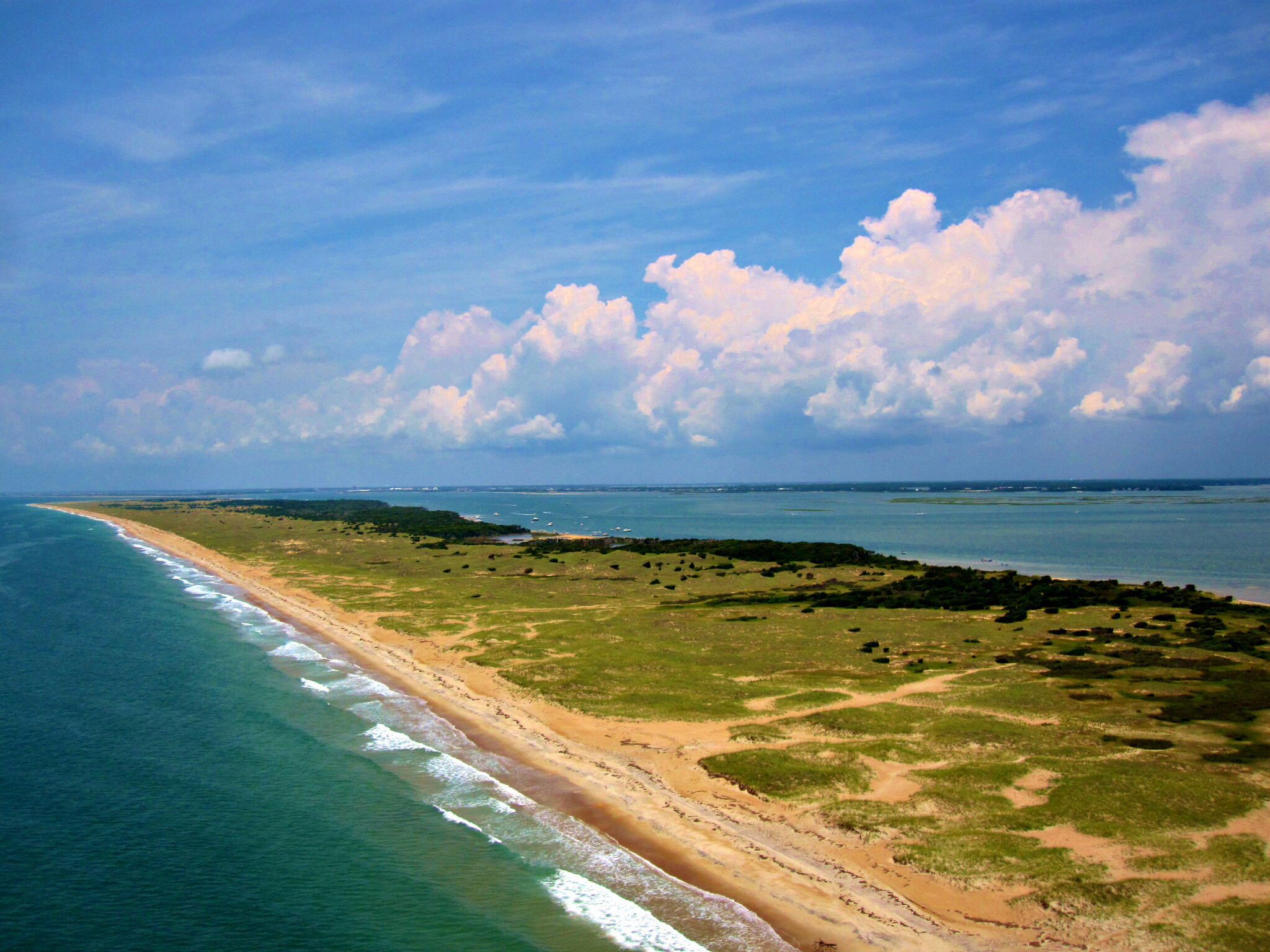
Cape Lookout
Story


Fisherman Shacks–“shanties”
The Cape has long been a base for fishermen. Rowing or sailing around Shackleford Banks (10 miles long) and having to return with (hopefully) a heavy load of fish made a camp essential, especially before Barden’s inlet opened after the 1933 storm.
After WWII, fishermen maintained camps there as well.
The British ship, Viper, documented “whaling huts” on their mapping of Cape Lookout in 1731.

Documented use for fishing shanties 200 years ago is not surprising–on April 4, 1827, Thomas Marshall purchased one-half of James Hart’s property on Core Banks, near Cape Lookout Lighthouse (nine hundred and ninety acres)—“there being a fishing place or places on said land….the same shall be rented out yearly by the said parties to the highest bidder….”

James A. Rose--Harkers Island–interview by Connie Mason
(Dallas Rose Camp–James went there first in 1939-1940)
BR: Connie, his mom and dad had a fishing camp on Cape Lookout. JAR: It’s still there, Hon.
BR: It’s under the sand, now.
CM: Is it really? Can you show me where it is on this map?
JAR: Yeah, yeah.
CM: If I can get out from this chair.
JAR: I wrote Sickle there, Connie. That one will bring you back.
CM: Show me where your mom and dad’s camp was.
JAR: That’s over on Cape Lookout.
BR: Yeah, Cape Lookout.
CM: Oh it’s on–, well, here, I mean, I’ve got this map. I’ve got the most maps.
JAR: Yeah. Now this is just the west side of the drain right here.
CM: Now this is the lighthouse up here and that’s Les and Sally’s, that’s Casa Blanca, and that’s the Coast Guard Station. Those are the landmarks you’ve got.
JAR: Ok. Now it’s right–, let’s see now. We call this the head of the cove? This would be Billy’s Hill here, right here.
CM: Write that down for us. Put–, just write on it. Billy’s Hill. Is that Billy Hancock? JAR: Ummmm.
CM: Now don’t let me put words in your mouth.
JAR: Billy Guthrie, I believe it is, I was thinking.
CM: Billy Guthrie. Billy’s Hill.
JAR: Umhum, Billy’s Hill.
BR: They had a camp there, too, fishing camp. JAR: Yeah, they had one up towards The Glade. BR: We went there one time.
JAR: Yeah, that would be up in here. This is marsh and sand, made up of marsh and sand, and they called that The Glade. For some reason or other, they said they would go up in there ever so often and shoot a couple of ducks or something, you know, right here. Because it was tall grass and water, you know, standing.
CM: So right in here? Right in here? JAR: Right in here.
CM: Right in here.
JAR: Umhum. Yeah.
CM: I’m going to put “The Glade.” JAR: The Glade, that’s right.
CM: Ok.
JAR: Some of it is. Some of it is, yeah. But right here in–, right in this area–.
CM: Go ahead and mark that for me.
JAR: Is where we had the camp.
CM: Ok.
BR: It’s buried now. It’s under the sand.
CM: What was left? Just the pilings?
BR: The whole camp–.
JAR: The whole camp.
BR: Was covered.
CM: So it is like the sand, a dune, over it?
JAR: It’s a dune and it all looks natural.
BR: The way we saw it the last time we went. It’s been a long time.
CM: Omigosh.
BR: Bunk beds, everything that they had in there. An old wood stove
JAR: Yeah, we just–, I reckon they took what they wanted out of there and left the house.
BR: Well, he sold it to another guy. What was his name? JAR: Dallas Sutton.
BR: Yeah.
CM: Dallas Sutton?
JAR: Dallas Sutton. CM: S.U.T.T.O.N.?

JAR: My first trip to the Cape was a fishing trip. My dad decided he would take me over there and I was only five years old. I remember, Connie, playing with that little boat. I remember that from camp. The camp was built on short pilings, but I had plenty of room to walk under it because one night while we were there Uncle Edwin, he stayed to the camp to clean up from supper. And he did the cooking and cleaning. They left him in the camp to do that. That was his part.
CM: And his name was Edward?
JAR: Edwin.
CM: Edwin?
JAR: Edwin Hanson Rose. Hanson was his middle name from a Mormon man. CM: A missionary?
CM: Now is this the same place (speaking of the Sutton cottage above) that as a boy you played underneath it. BR: Yeah.
JAR: No, no.
BR: It’s not?
JAR: No, no. That’s down here, in Cape Lookout Hills. This was way down the way it made then it would be something like that down there, you know. This stops here, you know, but it goes on out like this. And that on up here.

“The Great March Island, well, it’s like this now, that name has changed—this is, we call it Danny’s Island….Rose’s Island. He had aa little camp built right on here, hack a net spread and everything on there.”. “Yeah, he had his little boat and had his net spread right there, right next to the camp. The camp was no bigger than this room. it was real little….I would say 12 by 14 feet. It wasn’t big. You have bunks in one end of it and a little table or something to sit down to.” (James Allen Rose Interview—CALO project—Connie Mason)
Samuel “Leeby” Willis remembers the house just to the west of the drain, on a small sandy lump and felt that he may well have lived there….just as you went around the turn, there was a lump..it was a lump off from it and he built a camp on it. It was always sitting out by itself, surrounded by water all the time…What you done, you used a skiff whenever you had to and walked across it when you could.”
Doug Guthrie Interview–Harkers Island–
In 1958, and years surrounding, Doug fished out of camps at the Cape during the fishing season/ seasonal favorable times, such as, late summer and for trout.
He initially fished and lived with Albert Wade who had a camp near the lighthouse–labelled #1 on his representation on nautical chart. The structure, and also the other 3 camps he marked, were rectangular simple construction with simple furnishings and a kerosene stove.
Jim Miller Willis had the next camp (#2) moving further from the lighthouse. He was described as older than the others. His son, Bonner, was there part of the time.


(from Park Service photo survey and comments/identification from Les Moore–1970s)———–Captain Jim-Bob Willis
JIM MILLER WILLIS
“had a fishing camp between the Coca Cola House and the Village–a little back from the shore.”–Emma Rose Gaskill
Further still was the camp of Worth Davis positioned on a “high hill”. (#3)
WORTH DAVIS
“Worth had a camp to the right hand side (the north) of the army dock, on a high dune. It “went off in a storm”–(to sea). When ERG and family stayed there, daughter Judy (Guthrie) loved to clam. She would sell the products of her effort to tourists–”fresh clams -just caught”, she hawked.”
“Once, while at the Davis camp, a storm came up and slammed their boat up against the dock. Their boat was named the U.S.S. Sow Dog and had broken from anchor. ERG still is unhappy that the CG men would not secure it though they were there–Sterling Gillikin was he chief then–he said regulations prohibited them doing anything. Years later, at the dentist office, she gave him a piece of her mind. The family had to return to HI with half the cabin destroyed. Later she learned that 2 men drowned that night in the same storm that broke the boat loose.”—
excerpted from Emma Rose Guthrie interview
Telford Rose had the next camp (#4), even further from the lighthouse. Telford was described as tough–the toughest. Doug joined Telford to fish and live after Albert stopped. In the Bight of the Cape, they would run out a long net after the moon went down and pulled it in after overnight .
Tough Telford felt confident to challenge a boxer that came to the area, saying “I’ll kill him” but the boxer beat Telford’s eyes out–he had to surrender/give up.
Doug knew Fred Guthrie (Dr. Fulcher’s good friend) well and also Dr. Fulcher-(who had “Fishing Cottage #2 in Cape Village”)-he said Dr. Fulcher was such a good doctor–not like any other. Especially, he could care for a stingray injury so much better than others and certainly better tan today. Dr. Fulcher would cut out a core from an area injury by the ray stinger
He remembered Jack Davis at the Cape as officer in the Coast Guard–being a little wild, he died after rolling over his jeep while riding wild over the dunes.
Doug went on to commercial fish in Florida and later ran a small scallop house in HI with his brother. He invented the mechanism to “kick up” clams,
BERNIE BROOKS and ISABELL
“They had a cabin between the lighthouse and the village near the Les and Sally store–it :”floated away” in a storm.”–Emma Rose Guthrie
Across Barden’s Inlet, on Shackleford Point, was the fishing camp of Tom Martin (“Tom Martin’s Point”)–

Tom Martin‘s camp–Tom Martin’s Point–sat across from the lighthouse on the eastern point of Shacklford. It, too, was a base for fishing.
Captain Jim-Bob Willis—
Camp pictured above–
Terry Reeves remembers his name as “Jim Bob Willis” but though Terry helped build the A-frame Reeves cottage, he remembers no structure on the site. Bud Doughton remembers this or a cottage similar more toward the point atop a dune.
Terry recalls it being told that Capt. Jim Bob would take his boat across the submarine net at night to take vegetables, produce and supplies out to the German subs. “Harkers Islanders were not too much invested in that war”—at least at that time.
Les Moore was in a platoon watching for local interaction with subs—that platoon’s raid caught a boat near Core Banks in the act of meeting German sailors. The capture resulted in several German POWs and local “traitors”—as told. Both Les and Sallie told this story to David Reeves.
(history provided by Sam Bass after consulting Terry Reeves)
Billy Guthrie’s Camp–
JAR: Billy Guthrie, I believe it is, I was thinking.
CM: Billy Guthrie. Billy’s Hill.
JAR: Umhum, Billy’s Hill.
BR: They had a camp there, too, fishing camp. JAR: Yeah, they had one up towards The Glade. BR: We went there one time.
JAR: Yeah, that would be up in here. This is marsh and sand, made up of marsh and sand, and they called that The Glade. For some reason or other, they said they would go up in there ever so often and shoot a couple of ducks or something, you know, right here. Because it was tall grass and water, you know, standing.
CM: So right in here? Right in here? JAR: Right in here.
CM: Right in here.
JAR: Umhum. Yeah.
CM: I’m going to put “The Glade.” JAR: The Glade, that’s right.
CM: Ok.
Excerpt of Emma Rose Guthrie interview–
But my most special memories are the Cape and Banks when I was small and growing up. We stayed at the Cape all summer long not too far from the lighthouse….
After i got married, a friend of ours had a small cabin on the hill near the Baker House, and the old army dock. He would let me and my family stay in it in the summer, he just used it in the fall and winter for fishing and hunting……later a storm came and took the little cabin out to sea.
We were lost with no place to stay to the Cape. But over at Shackleford, my husbands aunt and uncle had a small two-room cabin, they had it a lot of years, now they were getting older and sickly and couldn’t go anymore. So we bought it from them…
Additional similar structures


Above, left–abandoned structure near Cape point and #4–Abandoned structure on Reeves’ land
Credits
- Connie Mason interview–Cape Lookout (CALO) Interview Project
- NPS files and archives
- Doug Guthrie–Harkers island
- Sam Bass, Jr.–Atlantic Beach
- Other references within text