
Contents
Story
Decoys
Credits

🟡 LARGE RESEARCH VOLUME
OWNERS
Julian “Jule” Hamiltion, Jr.
Julian Hamilton, Sr.
1950s
OTHER ASSOCIATIONS
TRACT #113-01 and listed as “old number” #25 N. Don Morris on 12/80 NPS structure status report
LOCATION
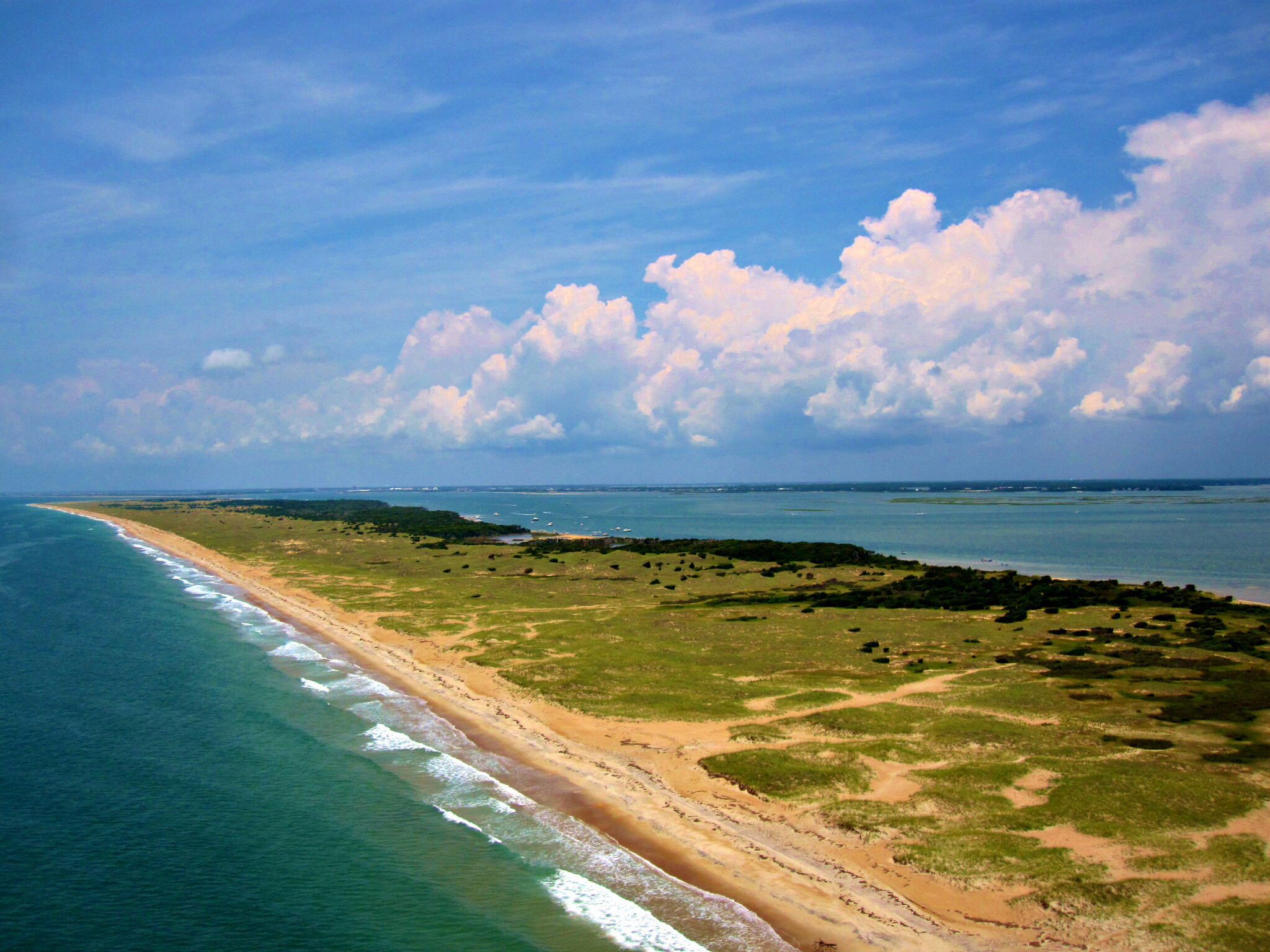
Three Hat Creek, North Core Banks
Story


do you know more? contact me.
THE EVERGREENS
“Jule” Hamilton’s camp was one of the best known Banks camps–especially among hunters and decoy makers.


’89 Christmas–Three hat Creek in background and skiff lying along dock on a smaller finger creek.


The camp had an indoors bathroom added in about 1969 and hand-pump and sink on the back wall for wash-ups but the well for drinking water was more inland. It provided a good water supply till Blanchard Lupton built his camp at that site. A year later, the creosote on the pilings he used had made that water undrinkable. A new well was established at the near the dune ridge line. That water was so good that Jule often brought some home for drinking–instead of Beaufort town water.


Craig Hamilton interview-May, 2022———————

Craig’s first trip to The Evergreens—-
Julian Hamilton, Sr. lived in Atlantic, N.C. before attending Trinity College and later, fighting in France in WWI. Craig relates: he was the ”the maddest man on earth” -with the fact that his education and officer status caused him to have to stay in Europe an extra year for “reconstruction” after the war was over, while non-officers returned home immediately. But the connections he made then led to him to the opportunity for shipping Wood Duck eggs to Italy. After college, he was employed in Beaufort with First Citizens Bank.
Julian, Sr. often hunted with Leckler “Leck” Lewis thru the years. As describd in Neal Conoley’s book, he met Mitchell Fulcher and developed a long friendship as well. Craig remembers references to his GF’s camp off from Cedar Island—he is unsure where, maybe Hog Island. He later moved his camp because the initial area “got too crowded”. Craig was unaware of the 1933 deed showing sale of a parcel on Core Banks to Wilbur Nelson and Landreth. by his grandfather. Craig has heard stories of that camp, including involvement of Leck Lewis, but is unsure when it would have been built.
Julian Hamilton , Jr., “Jule” -what he was called- bought 208 Marsh Street for $4,000 with his wife Ethel–and began renovations in 1955 (house built in the 1850s). Jule, like his dad, also kept wood ducks and raised Great Canada Geese. (Craig caries this on still today).
“Jule had a really good relationship with grand-daddy–carving together and raising birds–one was a flock of wild mallards but also Canadian Geese raised for breeding–called Great Canadians–he raised these out off Hwy 101 near Russell’s /Creek–where he had 60 or 70 geese–”daddy could tell you the genealogy of everyone of them.”
The old camp was at the head of a creek— built when? “I want to say- -in the early 50s, not in the 40s–dad was in WWII and then moved from Atlantic to Mississippi to shad fish–in the early 50s, before I was born”
Built by grand-daddy and dad along with Thomas Hamilton helping, plus “these guys “(in the pic) had a hand in building the camp–”that’s the camp on the back porch—it would be to the northard–we would draw the intestines out of the ducks and hang them out on the shaded porch–can’t do this now because of there being so many raccoons over there—“ (photo at start of story)
The camp was alongside a USCG geodetic marker–they had no deed according to Craig, till Claude “Rob” Wheatley helped them get a quitclaim deed to protect their interests from the NPS. “Rob had a camp to the village, but liked being at the Evergreens with dad better”–Rob was given an interest in the camp in return for help with retaining their interests in the camp. Wheatley eventually built onto/enlarged the camp along the north side-covering that porch-
Rob and his crew would come down with steaks and such, but Jule most often “only would take onions and flour”-planning to live off the water and birds–”he got his own food”–As soon as the boat touched shore, the kids would begin hunting shorebirds for dinner and a net was set for fish, all while the adults offloaded the boat. Jule proudly felt that with shelter and clothing and flour and onions— he could get along fine (though the Wheatley crowd brought coolers full of food.)
Jack Gardner related David Wheatley’s expderience: David was hunting at the Evergreens with Jule and suppertime came without fish or fowl harvested that day. Jule went out hunting the marsh and returned with a heron. David told Jack that it was just “like eating treated lumber”. David threw a piece of the meat to the floor for his faithful dog who licked it twice and “walked away, licked his a__, and curled up in the corner”.
Actually, “dad was a good cook–a good traditional cook”–in later days, dad would stay in the camp while we hunted and be would cook whatever we brought in.
“Dad didn’t want to go to the camp if he couldn’t go for at least a week, “you could forget about everything” there–it took about a half day to get to the camp by boat from Beaufort. (Grand-daddy had used a sailing skiff in his early years of going to the Core Banks. Craig shared photos of that skiff.)


The camp was reached by coming into the shore off from the pond in early years before shoaling but later (in the 60s), they came up a finger slough off Three Hat Creek to a dock alongside, and not far from the camp. At the head of the creek was an older unused camp, in a prime location, and just as old as Daddy’s, making Craig feel that Evergreens was preceded by that camp. When you pulled up to the dock, the merkle bushes and brush blocked view of the camp, reached by a narrow path.


The drawing above points out that the bathroom was added in the 1970s–previously an outhouse was used, over a dug-out pit, and down toward the dock.
Shown also are the additions of another front section done by the Davis Shore men for another net house, storage–and the north side Wheatley addition.
Hurricane Gloria moved the camp–that hurricane went right over the Evergreens–moved the camp 10-15 feet–the Davis Shore men (Ken and Osborne Davis) and Rob- Wheatley-they all wanted to tear down the camp and build a new one–dad wanted to rebuild the camp–that was what was done—re-built the chimney at that site.
The camp was about 15 by 30 feet–enough for end to end bunk beds on the east side with a couple of feet between their ends–another bunk was positioned on the north side between the sink/pump and the other bunk beds. The kitchen area had a gas stove and the chimney was served by a “Warm Morning” wood stove–cast iron–many a duck and goose head went in there—connected to the brick chimney–like a potbellied style stove—they cooked on a propane stove in the kitchen–and propane lights in later years—earliest years had hurricane lanterns. It had a flat roof–had to pour tar on it every so often. For water—we would drive a well point-drive down with a car axle, but never drank sink water, too salty. It provided a good water supply till Blanchard Lupton built his camp at that site. A year later, the creosote on the pilings he used had made that water undrinkable. A new well was established at the near dune ridge line. That water was so good that Jule often brought some home for drinking–instead of Beaufort town water.
“As a young-un, had to stand out backdoors and they poured water over you for a shower”. In summer, the women went over rarely–but not in winter/hunting season.
When lights were turned out and there was only the faint light of the turned down light— Craig remembers that they would tell stories in the dark for a good 45 minutes—old hunting trips and events–stories of prior trips.
You could leave your boots out on the deck–the slatted floor inside had the cracks between filled with dirt and mud.
Grandfathers boat was called “The Peggy”, an 18 footer with canopy–taking 3 hours to reach camp. Earlier, grandaddy had used a sailing skiff for transportation–?length of time and ?embarkation point unsure. Jule never had a boat— in later years, Jule rode with Jack Taylor from Beaufort—once there, he always had a skiff there to get around–
??Other camps there?–Yes, one camp that was just as old as daddy’s, but I just can’t tell you whose it was. “Henry eventually built a camp there–Henry Kirk–wanted a place of his own–his kids still in town.”
In later years, Blanchard’s camp–of HI–also Lenny Goodwin in on it, from Atlantic–daddy would call it Blanchard’s camp–and then, I wish I knew the old camp–dad may have got there second. Blancharfd came in the 70s–before it went “ bad”, then every year another one popped up along the creek–didn’t know who they were, from upstate—“

Everything the NPS did was a double-edged sword–we wish they had grandfathered us in, but if they hadn’t’ done something, it would have looked like Myrtle Beach.
Liked best?—”I really enjoyed–not politically correct–loved hunting the shorebirds–the willets and graybacks–daddy wouldn’t let us shoot curlews or oystercatchers–rarely shot a yellowlegs–never remember shooting a red-knot, they were on the beach and not on the march and islands–later I liked fishing.”
“Terrapins used to be everywhere–but not anymore—blaming this on commercial fishing seems unfair, so many raccoons and I think the raccoons eat the turtle eggs–my thoughts, not scientific.”
“We would occasionally eat terrapin (once a year or every other year) and more often sea turtles (caught by others while commercial fishing).


The camp was last used in the 90s–dad quit going in the early 90s due to his cardiac disease. Leck had earlier moved to Kinston to run his seafood business there.
Decoys

Jule in production mode. If not driving the carpool to Cherry Point to work, Jule would carve with a towel on his lap on the way there and back–finishing a decoy each workday.


Credits
- Craig Hamilton–Atlantic
- Jack Gardner, Beaufort
- NPS files and archives
- Additional references: Neal Conley, Waterfowl Heritage and Jack Dudley, Carteret Waterfowl Heritage
- Other references within text