
Contents
Story
Decoys
Credits

🟡 AVERAGE RESEARCH VOLUME
OWNERS
Emma Rose Guthrie
Garland Guthrie
1960-built
1980-purchase
OTHER ASSOCIATIONS
Lennie Salter–camp #20 on 1977 NPS structure survey
LOCATION
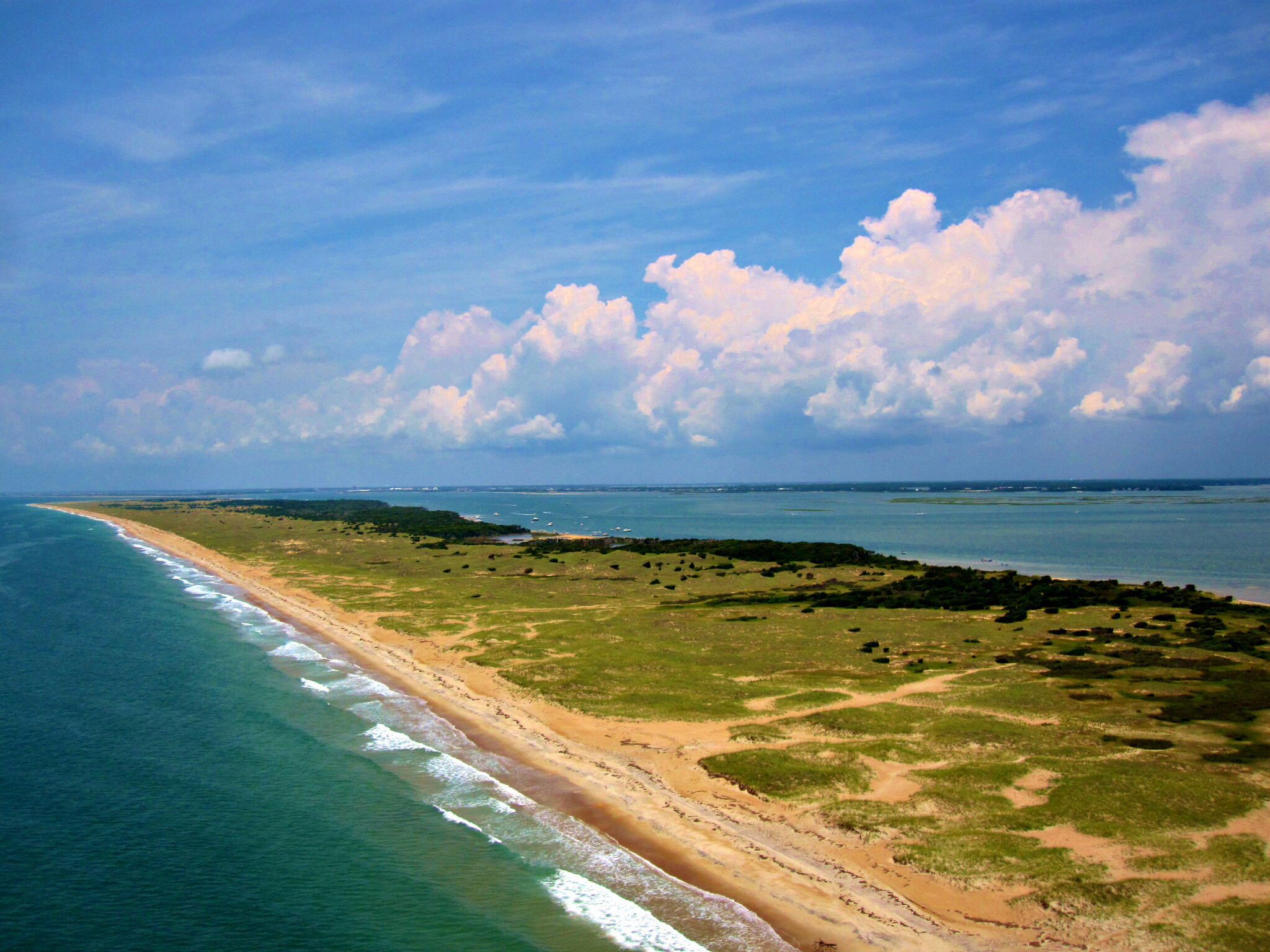
Shackleford Banks, Bell’s Island (“Little Miami”)
Story


do you know more? contact me.
Emma Rose and Garland Guthrie


In September of 1987, Emma Rose Guthrie was crossing east on the North River bridge and looked to her right across the water to Shackleford Banks where she saw five spirals of smoke rising up– but making her heart sink down. She realized that one of the fires was most surely that of her beloved camp. Emma Rose shared this memory as her first one, a painful one, that came to mind when asked about her camp. Then her thoughts and memories moved on to a flow of rich, positive memories.

Emma Rose purchased, and received a bill of sale , for the camp from her sister and husband- Shirley and Lennie Salter- in 1980 for $500. They had built the camp in 1960 but age and illness had-prevented ongoing use. Love for the Banks was rooted in generations of family living and working at Cape Lookout and on Shackleford Banks and the Banks seemed like a front yard extension of their home–as their camp-could be seen directly across the water from their south looking “pizer” (porch). The camp was nestled near the sound’s shore in a cluster of more than 13 camps and just 300 yards west of the old horse pens in an area called Bell’s island. The established community even had an established baseball field for mixed generational community play but the Banks had no shortage of natural entertainments and resources. Fences protected the camp buildings from the free-ranging livestock on the island that had long, centuries-long, been used for mixed herds of cattle, sheep, goats and horses. A porch and elevated deck was added to the Guthrie’s camp along with inner improvements. Emma Rose would clam, fish nets, gather oysters or flounder–whatever was :”running” and sold her days work to buy supplies which she used to upgrade the camp. Her brother-in-law, helped Emma and Garland with much of the construction.
Kids would run free and learned to entertain themselves in a largely unspoiled setting. Beloved to the entire family, Emma Rose says she surely would have picked her camp if given the theoretical choice to save either home or camp from Park Service destruction. Born in the memorable 1933 hurricane year, Emma Rose descended from the family of Bankers like Josephus Willis (famous whaler) and spent summers and much free time with her grandmother Hattie at the Cape. She had hereditary and emotional roots that evolved to create love and reverence for these narrow banks. A plaque over her Harkers Island fireplace reads “The Lord works his wonders all over her world–But He lives to the Cape”. Her smile widens when talking of experiences there. As storyteller and writer, she has documented the richness of that place and lifestyle. You can not help coming away with a deeper understanding of the impact of the changes brought to the up to 400 bank structures with the NPS takeover and the thousands of people thus touched.


When Emma Rose was 12 years old, she watched from shore as 5 U-boats burned–
no lights in the home-one candle-windows blacked out—the Coast Guard, Navy, and Army were at the Cape.
—”I couldn’t sleep–slept with my grandmother–she would tell me stories as we lay there–maybe where I got my storytelling “
“The Cape was a part of me”


Emma Rose and Garland used a friend’s camp at the Cape for several years. Hettie and Telford Rose, grandparents, had lived at the Cape early in the century. (“Hook Village” was the nickname Emma used for the village the Cape).
——————–
SP: Yea, but I really loved it here but I knew that my heart was with him and that I was going to go with him. But, it was a struggle.
CM: Right. In that year that you were on Harkers Island, you did love to go to the Cape?
SP: Oh, yea, it was wonderful. I had a couple of the parents had camps over there. They’d invite me to come. Emma Guthrie, I think her husband’s named Garland, they’re still alive. So, they invited me to go with them and spend the night. They had one of those old jalopies and we rode up and down the beach. No restrictions. It was pure freedom.
CM: Was it at the Cape or Shackleford?
CALO Oral History Project 10-013 December 15, 2010
SARAH PAGE 19
SP: It was on the Cape cause I remember being around the lighthouse.
Emma was born March 21, 1933. Fifth of 14 siblings—born on Harkers Island. Her father was born at Cape Lookout. Jesephus Willis was her maternal grandfather. Her father was Leslie Rose and her mother was Christine Willis. The Willis’ came from Shackleford Banks and the Rose’s came from Cape Lookout. village (“Hook Village”) Emma’s ancestors had left Manteo and headed toward these Banks. She is a decendent of the Coree Indians.
In January, 1987 the camps were burned by the Park Service. Their camp was her and her husband’s livlihood. Boating, clamming, fishing, and anything to make money in the water. They would live over to the Cape and Shack to work. All the men of the Island would work out of these “camps”. They would spend night and day working, fishing nets, clamming, and anything. It was their way of life.
“Cabins and homes were always over to the Banks”, prior to inhabiting Harkers Island. Emma cannot remember a time without them. Emma’s grandmothers home was located at Cape Village, near the old Coast Guard dock. Emma’s father was a commercial fisherman and a boat builder. His camp was at Shack. Later, Emma’s brother (Manley Rose) had his own camp, too. Bells Island had 13 housing camps total, encompassing part of Shack and about 300 yards west of the horse pen. Ike Guthrie, Clarence Willis, Lennie Salter, and Telford Rose made up a few that had camps near. The camp was a large room and later added a hand pump, a kitchen, bunks for kids, and then ,way later, added more rooms. She built the porch addition herself. The porch was on top and screened in so that they could see the ocean.
She had learned to surf on staves of wooden barrels washed ashore from the ships that would pass by the Cape on the oceanside. A baseball field was beside the lighthouse and also at Bell’s Island at Shack, and they frequently played co-ed baseball.
They had school , in her childhood, at the Methodist Church on Shackleford. They would attend both church and school there.
Credits
- Emma Rose Guthrie–Harkers Island
- NPS files and archives
- Sarah Page interview–CALO project–Connie Mason
- Other references within text