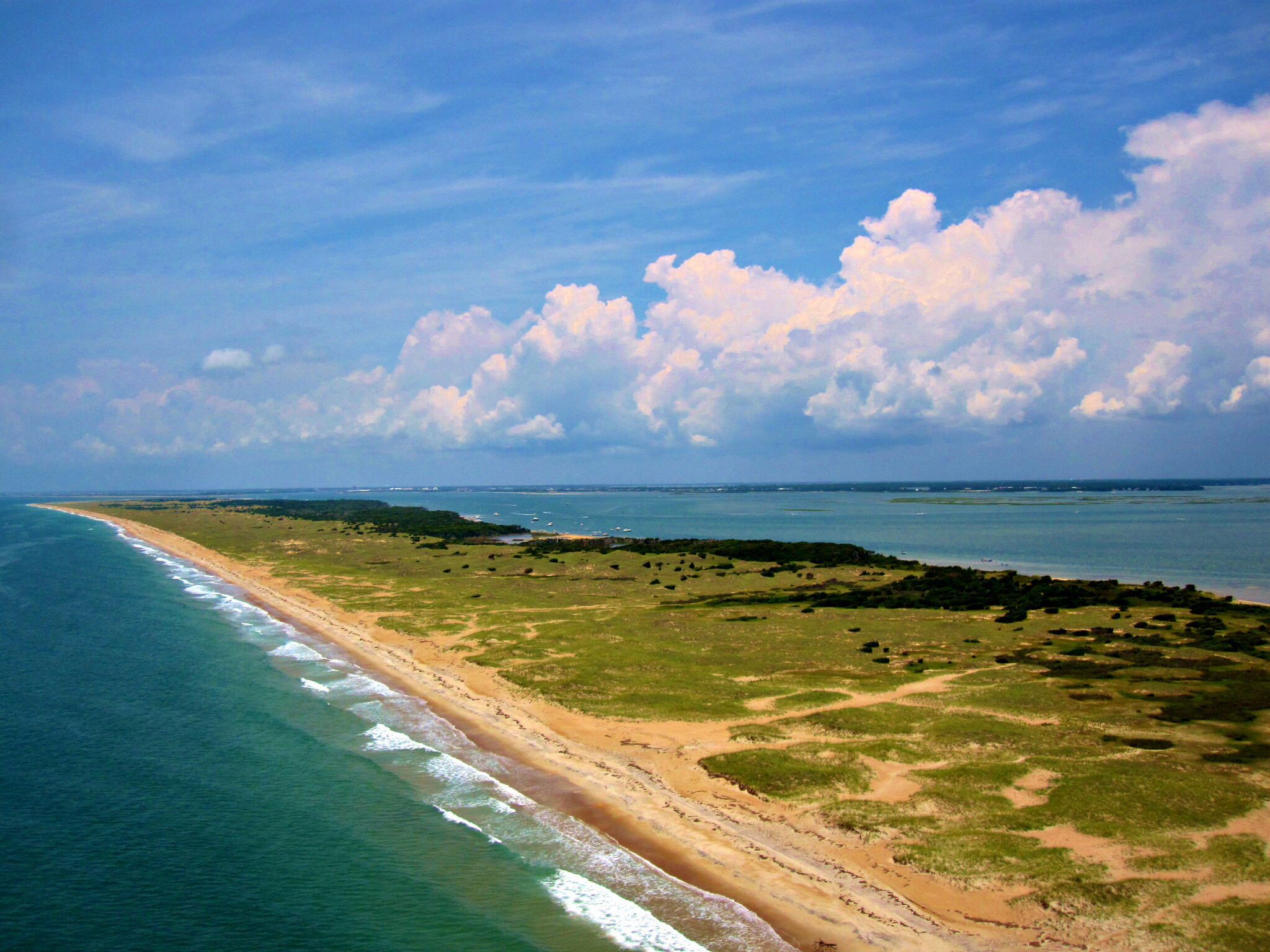

“It is the last part of America’s Coast which still belongs to God.”--Don Morris
Contents
Story
Decoys
Credits

🟡 AVERAGE RESEARCH VOLUME
OWNERS
Ira and Don Morris
Cape Lookout National Seashore
1936 origin
established 1966–implemented mid 1970s
LOCATION
North Core Banks–near Drum Inlet
Story
Beginning in 1936, Ira and Don Morris Kabin Kamps were a prime site and resource for what many called the best coastal surf fishing possible. After the NPS takeover, the Morris role moved to that of concessionaire.
Storm over wash and hurricane damage brought about the current move of the Park cabins to a new area to the north of the original Morris site and Park’s Long Point setting.
Donza Lee Morris b. 12-22-1930 d. 12-22-1995


do you know more? contact me.
Don Morris tells his own story


Snow and Ice–occasional factors–


“The building is an example of the traditional fishing camps that were established as businesses on the Core Banks by Atlantic families after the Depression and WWII. ” –from above document
At least four generations of men in the Morris family listed their occupation as “waterman, boatman, oysterman, or commercial fisherman” dating back to James Riley Morris, described as a “fisherman” living in Portsmouth in the 1850 census record. In 1900, James Morris was still working on the water as an oysterman at 72 years old. James’ son Alfred Chadwick Morris (Ira Sr.’s father), who lived his entire life on the “rural hunting grounds” of Carteret County, fished commercially from a wooden boat that he built and Captain Ira’s two sons, Ira Stowe Jr. and Donzalee (Don) continued the family fishing legacy on the Core Banks.
After the 1933 Outer Banks Hurricane that opened the Drum Inlet, Ira Stowe Morris Sr. had begun ferrying and guiding recreational fishermen to surf fish the Core Banks, constructing a dock and seasonal shelters at mile 17, north of the inlet in 1935. Unlike the Pilentary and Carteret Rod and Hunt Club, the Morris’ fishing cabins were “rough”, built using materials readily available and able to be rebuilt easily on the migrating and storm battered landscape. Numerous newspaper and magazine snippets referred to Morris’ “simple fishing camps” near Drum Inlet beginning in the late 1930s. A 1952 article in State Magazine called Ira Morris Sr., “the grandaddy of surf casting at this point” who “has cabins for 50”. In a 1954 article also in The State, Morris talked about doing “all he could to keep his property from being blown and washed away.” The author wrote that Morris, “puts out old car bodies to catch the wind and thus start dunes. Even his garbage is carefully piled on the beach for this purpose.”

In 1961, the family sold their 690 acres of land on Core Banks to the state and Don, who had worked alongside his father starting when he was 16 years old in 1946, took over the business. He occasionally used his grandfather’s wooden fishing boat along with his water taxi the “Greene Grass” to ferry recreational fishermen to the surf at Core Banks. He improved the marina that the family had established in Atlantic in 1952 and managed the “Kabin Kamps”. In an undated article, the camps are described as “nine ‘Kabins’ and 12 apartments, which are rough but just right for the fishermen who plans to spend most of his time on the banks fishing for the giant blues, trout, flounder, and those fighting channel bass (drum), which abound.” In the same article, Don Morris described the camp as, “in the rough but apparently much in demand.”
( “Atlantic’s Don Morris: He’ll Ferry You to Fish.” n.d. Accessed by Capt Donza Lee Morris (1930-1995) – Find A Grave Memorial This newspaper article is likely from 1971 based on a reference to the planned reopening of the Drum Inlet.)
from NPS file–application for National Historic Registry--draft document


Green Grass—Donza’s shallow draft 43 foot—was used to ferry eager fishermen to Core Banks.—drawing only 3 feet of water and she could carry 3 beach buggies and a score of fishermen each trip.
His father Ira set up the first camp near Drum Inlet in 1935, on the south side. Don worked with his father beginning at age 16.
“On the island are nine “Kabins” and 12 apartments, which are “rough”, but just right for the fisherman who plans to spend most of his time on the banks fishing for the giant blues, trout, flounder, and those fighting channel bass (drum)” which abound.
An employee stays on the banks to provide dune buggy transportation, bait, a few groceries and radio contact with the mainland.
“Rough but in much demand.” He has a 112 foot deep well yielding good water. September, October and November are particularly busy.
(excerpted from Joe Edwards news article—Aug. 11, 2013)

Bland Simpson describes a trip to North Core Banks
Clay Fulcher, III described to me the not infrequent use of the Don Morris docks and facilities which were located south of his “little camp” at the Wib’s Creek area.

Gallery
Ira and Don Morris Kabin Kamps–photos are a mixture of early (mid 1970s) and late century (1990s) photos of structures, settings, and post-storm damage. Overwash and storm damage made re-establishment of Park Service camps further north–Near “Wib’s Creek” (an area that Clay Fulcher, III said had never over-washed in storms).


Credits
- Cape Lookout National Seashore–ar hives and files
- Clay Fulcher, III–Atlantic, NC
- “Find A Grave” –internet site
- Other references within text