
Contents
Story
Decoys
Credits

🟡 AVERAGE RESEARCH VOLUME
OWNERS
W. M. Webb–1917 purchase from State of N.C.
Portsmouth Fisheries Company–1917–purchase from Webb
H.A.Morson and A. Burrell–1926 purchase from fishery
M. Burrell–1958–purchase from sheriff on courthouse steps
June Teich Bryan –1978–grand-daughter, sale to new group
Dean Cameron Smith, Jeffrey Don Lewis, James W. Salter, Jr., William L. Adams, and Charles David Spivey–8/11/1978 purchase
Dean Smith is only surviving member, still with ownership
OTHER ASSOCIATIONS
Also called: Casey’s Point, Keys Point
lease to Robert Miller, Marshallberg
Robert and Darlene Miller–early 70s
LOCATION
offshore, north of Portsmouth, North Core Banks
Story


do you know more? contact me.
Casey’s Island Camp
September 26, 1917—W. M. Webb purchased a grant for one dollar an acre—Casey’s Point (Caseys Island) from the State of N.C.—situated in Pamlico sound and in Portsmouth Township—consisting of 15 and 3/4 acres. (deed Bk 26-pg 422)
W. M. Webb sold Casey’s Point to Portsmouth Fisheries Co (of which he was one owner). on 8-21-20 (deed Bk 32-Pg122)

“In 1917, the Portsmouth Fisheries Company on Casey’s Island, off Portsmouth, was incorporated. Principal subscribers of this menhaden operation included Charles Wallace, W. M. Webb, and John M. Morehead, and others. The factory was operational in 1919. Two years prior, there were two boats built for Portsmouth Fisheries at their Bell-Wallace shipyard in Morehead city, the “Captain” and the “Colonel”–75 feet long and with 60 h.p. engines.. In November 1919, the factory burned down when ther night watchman dropped his lantern or lamp and the place caught fire.”
The night watchman and caretaker, Ed Dixon, was severely injured in the fire and later died from his injuries.


“Ellen Cloud, of Atlantic, shared with me an interesting story concerning a fisherman named Morris Fulford, who was born on Portsmouth, grew up on Hog Island, and lived his married life in Beaufort. He helped Tom Salter drive the well for the factory at Casey’s Island. Before this happened, the water for the factory had to be brought over from Portsmouth. They found a natural spring, which still flows under the water level. Morris Fulford Wass one of the eighteen menhaden fishermen who lost their lives as a result of the Parkins sinking on December 17th, 1942.”
(Steve Goodwin—The Researcher- Fall 2010—Pogy Fishing Down East)

The yellow camp depicted is the camp that preceded the Millers. (photo is from internet)
Robert Miller’s interview excerpts follow:

Robert used the Casey’s Island camp till the Park Service closed the runway in the late 80’s or early 90’s. His time there coincided with Charlie Vellines often being there. He remembers Charlie having a “bus” that he would take to the “salt flat” for he and guests to use. After Charlie’s M.I. and restrictions on his flying, Robert would fly together with him to Portsmouth.


Obtaining the camp in the early 70s from owners in Broad Creek (he does not recall their names), Robert replaced missing doors and windows and re-papered the roof and walls, added a deck and put in gas lights. The structure was 12×24, comprised of a bedroom and a kitchen-multipurpose room. It was destroyed by Hurricane Dorian. Previously, Robert had obtained the Robert Wallace Home lease in Portsmouth from the Wheatleys and others, who had moved their hunting to the Evergreens. At that time, he was able to obtain the Casey’s Island camp from the Broad Creek crowd. Robert researched the deeds of ownership of the un-used structure and was able to connect with them to obtain the camp. After Charlie Vellines died in “77, Sis offered Robert the lease on the /coast Guard Station but he declined.

The Millers started in the Robert Wallace house after the Wheatley’s stopped using it—Rob Wheatley gave o.k. for their use till the lease ran out. It didn’t leak and was structurally sound till there NPS did work on it and left the roof off for a period and the interior became damaged significantly


As the lease ran out, Robert found the owners of the camp on Casey’s Island and got the o.k. to take over use of that abandoned camp—Darlene is unsure if there was ownership of the island or just the camp structure.
Miller kept a john-boat on Doctor’s Creek at a dock and would fly in from Beaufort (or pick up Darlene on the road in Seagate community, and head for Portsmouth). The plane made it all convenient. He then flew a Cessna 170B. Besides hunting and fishing trips, he and Darlene went there to get away.
Robert remembers the 4 inch artesian well there, alongside the remnants of a building. It ran continuously. The water had the odor of sulfur gas but if left to sit, the gases would escape and the water would be “as good as you’d want to drink” after sitting in 5 gallon Jerry cans to release the gas. A large area around the pipe was deeper than surrounding waters and flounder were prevalent there, as well as other variety of fish. The pipe then stuck 2-3 feet out of the water with the 25 foot deep hole around it. Excellent for Sheephead and Black Drum. The pipe has since been broken off—supposedly after someone tied their boat onto it.
There was (is)an artesian well at one end constantly flowing clear but sulfur -tasting water–thru a 3 or 4 inch pipe. Robert rigged a cork plug and pipe insert to divert and make a shower on demand when plug was inserted briefly.
The area around the camp was mostly marsh. A friend was allowed to stack his crab pots on the island when working the area and given a key to the camp.
Robert remembers the Sugar Shack that accompanied the Station and Charlie’s tractor that carried fishermen and gear to the beach, well over a mile away.
At one time, an island built up inside the inlet and they would land their planes on the sand island and fish.
Robert recalled Earl Noe and Graham Mitchell being at Portsmouth a lot. If it was getting dark, he or they would buzz the runway a couple times and those at the village brought out the 3 wheelers and lanterns to light the runway. Later, Robert obtained several of the highway department smudge pots” to line the runway when needs arose.
The camp was green—with rolled tar paper around it and on the roof. There was a 55 gallon plastic chemical drum catching water from the gutters and a second drum underneath to take the overflow. This water was used for washing, etc.
Heat was provided by a ceramic propane stove and an old apartment oven. The kitchen and main room combo was 12×12 and the bedroom held two double bunk beds and 2 single beds. The camp was “tight”—“not that cold”. They had a VHF radio powered by a car battery that allowed a call to the Coast Guard Station if needed and relay messages to family on the mainland. At first ,Ocracoke Robert feined breakdowns, etc. to explain the need for the message relays. Bobby Hill. was the Station Superintendent—he told Robert that he knew what he was doing and he needn’t bother with the stories—they were happy to relay messages. Hill related it was “ Much better an option than worrying about them having real problems.” Bobby Hill also had a camp, looking after the Ross Salter camp, on Fred’s Creek at the end of the Battle Boys runway. He remembers two grave markers in the marsh at the head of the creek (Martha Day remembers them also and ?had pictures).
No outhouse existed—there was a 5 gallon bucket for use. They had tried to establish to attackh a tank filled with shells at the edge of the water but the marsh environment did not allow success.
Robert had a dock on each side of he cabin, built from dunnage, mahogany pilings that washed up off ships. Depending on the wind, he chose the favorable spot to tie up. Clams in summer, fish and oysters mid -October to November—always something to feast upon.
Robert is a cousin of Clifton Noe.
—“no good feelings about the Park Service since all the buildings are’ falling to hell’”—his renewal of his lease on Portsmouth was going to have ongoing cost of $25,000 per year and would need approval from Atlanta for every nail driven—-
Remembering Vellines, Robert remembers his bus/trailer—didn’t keep it long—and that Charlie kept an album of photos from trips to Portsmouth when the hurricanes came thru—He and friends went there for he storms—once, the plane was flipped upside down on the runway.
Bob Burroughs and Jack Savage helped build the runway and flew into Portsmouth.—Robert could never understand the moratorium on the runway and planes.
Robert used the Casey’s Island camp till the Park Service closed the runway in the late 80’s or early 90’s. His time there coincided with Charlie Vellines often being there. He remembers Charlie having a “bus” that he would take to the “salt flat” for he and guests to use. After Charlie’s M.I. and restrictions on his flying, Robert would fly together with him to Portsmouth.
Obtaining the camp in the early 70s from owners in Broad Creek (he does not recall their names), Robert replaced missing doors and windows and re-papered the roof and walls, added a deck and put in gas lights. The structure was 12×24, comprised of a bedroom and a kitchen-multipurpose room. It was destroyed by Hurricane Dorian. Previously, Robert had obtained the Robert Wallace Home lease in Portsmouth from the Wheatleys and others, who had moved their hunting to the Evergreens. At that time, he was able to obtain the Casey’s Island camp from the Broad Creek crowd. Robert researched the deeds of ownership of the un-used structure and was able to connect with them to obtain the camp. After Charlie Vellines died in “77, Sis offered Robert the lease on the /coast Guard Station but he declined.
The Millers started in the Robert Wallace house after the Wheatley’s stopped using it—Rob Wheatley gave o.k. for their use till the lease ran out. It didn’t leak and was structurally sound till there NPS did work on it and left the roof off for a period and the interior became damaged significantly
As the lease ran out, Robert found the owners of the camp on Casey’s Island and got the o.k. to take over use of that abandoned camp—Darlene is unsure if there was ownership of the island or just the camp structure.
Miller kept a john-boat on Doctor’s Creek at a dock and would fly in from Beaufort (or pick up Darlene on the road in Seagate community, and head for Portsmouth). The plane made it all convenient. He then flew a Cessna 170B. Besides hunting and fishing trips, he and Darlene went there to get away.
Robert remembers the 4 inch artesian well there, alongside the remnants of a building. It ran continuously. The water had the odor of sulfur gas but if left to sit, the gases would escape and the water would be “as good as you’d want to drink” after sitting in 5 gallon Jerry cans to release the gas. A large area around the pipe was deeper than surrounding waters and flounder were prevalent there, as well as other variety of fish. The pipe then stuck 2-3 feet out of the water with the 25 foot deep hole around it. Excellent for Sheephead and Black Drum. The pipe has since been broken off—supposedly after someone tied their boat onto it.
The area around the camp was mostly marsh. A friend was allowed to stack his crab pots on the island when working the area and given a key to the camp.
Robert remembers the Sugar Shack that accompanied the Station and Charlie’s tractor that carried fishermen and gear to the beach, well over a mile away.
At one time, an island built up inside the inlet and they would land their planes on the sand island and fish.
Robert recalled Earl Noe and Graham Mitchell being at Portsmouth a lot. If it was getting dark, he or they would buzz the runway a couple times and those at the village brought out the 3 wheelers and lanterns to light the runway. Later, Robert obtained several of the highway department smudge pots” to line the runway when needs arose.
The camp was green—with rolled tar paper around it and on the roof. There was a 55 gallon plastic chemical drum catching water from the gutters and a second drum underneath to take the overflow. This water was used for washing, etc.
Heat was provided by a ceramic propane stove and an old apartment oven. The kitchen and main room combo was 12×12 and the bedroom held two double bunk beds and 2 single beds. The camp was “tight”—“not that cold”. They had a VHF radio powered by a car battery that allowed a call to the Coast Guard Station if needed and relay messages to family on the mainland. At first ,Ocracoke Robert feined breakdowns, etc. to explain the need for the message relays. Bobby Hill. was the Station Superintendent—he told Robert that he knew what he was doing and he needn’t bother with the stories—they were happy to relay messages. Hill related it was “ Much better an option than worrying about them having real problems.” Bobby Hill also had a camp, looking after the Ross Salter camp, on Fred’s Creek at the end of the Battle Boys runway. He remembers two grave markers in the marsh at the head of the creek (Martha Day remembers them also and ?had pictures).
No outhouse existed—there was a 5 gallon bucket for use. They had tried to establish to attackh a tank filled with shells at the edge of the water but the marsh environment did not allow success.
Robert had a dock on each side of he cabin, built from dunnage, mahogany pilings that washed up off ships. Depending on the wind, he chose the favorable spot to tie up. Clams in summer, fish and oysters mid -October to November—always something to feast upon.
Robert is a cousin of Clifton Noe.
—“no good feelings about the Park Service since all the buildings are’ falling to hell’”—his renewal of his lease on Portsmouth was going to have ongoing cost of $25,000 per year and would need approval from Atlanta for every nail driven—-
Remembering Vellines, Robert remembers his bus/trailer—didn’t keep it long—and that Charlie kept an album of photos from trips to Portsmouth when the hurricanes came thru—He and friends went there for he storms—once, the plane was flipped upside down on the runway.
Bob Burroughs and Jack Savage helped build the runway and flew into Portsmouth.—Robert could never understand the moratorium on the runway and planes.


1978 “Broad Creek Group”–Dean C. Smith and others —
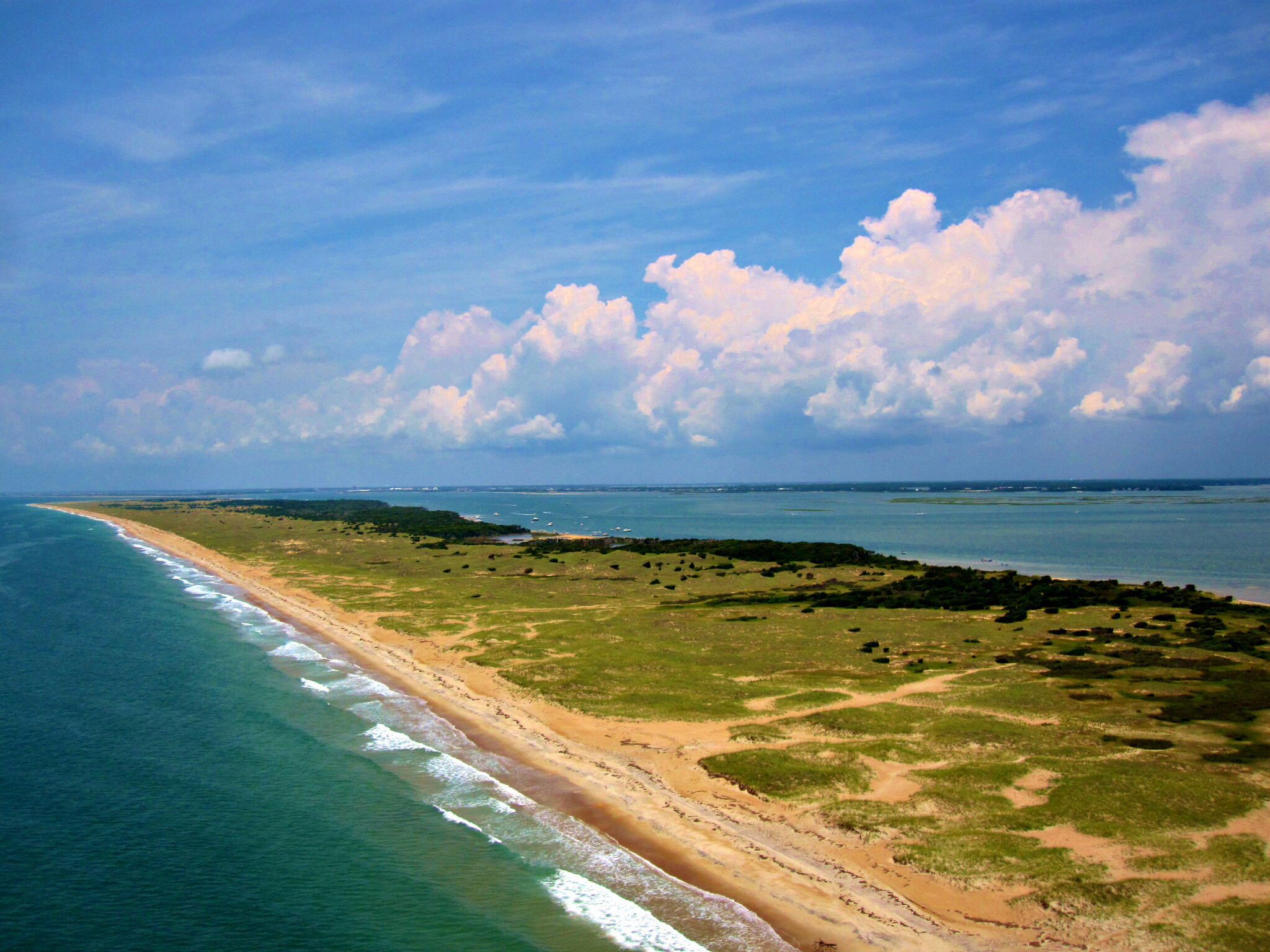
Lying outside the Park boundaries, the island is still privately owned–though without structures and with diminishing size. No longer 15.75 acres, it seems now like a large marshy sand bar.

Dean Smith Interview—July 10, 2026 at Franks Pizza Hwy 24
Dean and friends were at Jack Dail’s Bar on Nine Foot Road and the group discussed going to Casey’s Island to fish. Overhearing, a gentleman told the group that Casey’s Island was for sale. Fishing buddies, all but one of five eventual owners who worked together at Cherry Point decided to pursue the opportunity.
Dean contacted June Teich Bryan (grand-daughter of owner who had purchased the island for $25 on the courthouse steps) and found that she was asking $5,000 for the island and was successful in negotiating the $4,200 purchase price—1978. Dean mentioned that the island was the site of an earlier porpoise, shad and whaling fish factory. Casey’s Island is outside the Park Service–National Seashore boundary—it was used for both fishing and hunting.

Their first night there, they slept inside the concrete foundation of the old factory that was near the site of the artesian well—a waist high foundation remnant. Making three trips that day wth a loaded boat, the group carried, from the Cedar Island area, a pre-fab 12 by 12 structure that survived till Hurricane Dorian. First, four light poles and the floor were carried over. David Spivey captained the boat.

Two truck loads of gear—3 trips—carrying over the floor, walls, wood and doors—and the beer coolers, of course. Plywood ceilings, hurricane ties. Dead slick calm that day and hot. James Salter, who was drilling holes in the light poles for bolts, after a prolonged time and effort, complained that the drill bit was severely dull—-till the guys realized he had the powered drill turning in reverse.

C.A.M.A.—Charles Jones, the CAMA-man —informed them that they had to have a permit and that they had to take him over to the site. It was blowing from the NE and cold when they set off—Jones sat near the stern, back to the bow and with his jacket pullled up—waves were breaking over the sides and over him on the stern–he was freezing. Mr. Jones walked about the island, found a board and stuck it upright in the ground and declared that that had to be the site for the camp structure—which Jones documented by photo.
“Little Casey’s” was off to the east? They set a 100 yard gill net that brought some large spots—2 pounds each—unheard of size.
The five owners—-
James Wilbur “Dump” Salter, Jr.
Jeffrey Don Lewis
William Lawrence Adams
Charles David Spivey
Dean Cameron Smith
All are gone except Dean. Of the camp, only one 4×4 inch post remains from part of the deck.
Dean drew up an agreement for the group. Claude Wheatley, Sr. reviewed the document and found it solid. The group turned down a $10,000 offer from Wheatley wishing to be included in the group. Ten years ago, several guides offered $500 per month for use of the camp for hunting parties.
Later, Roger Miller, of Beachview Hardware “leased” the island and camp for free.
Most recent yearly taxes were $5.00, Dean related, but tax bills have stopped coming.
Bobby Hill’s camp was a neighbor—up in Bay Marsh—Hill could go and get anywhere, anytime.
Dean tells of setting his net near Bobby Hill’s camp—The Hornet’s Nest—and pulled up 51 roe mullet and a 5 and a half pound speckled trout but at the bottom of the net was a sea turtle—he thinks it was a loggerhead– lifeless –as pulled up. A buddy had talked about resusitation of a turtle by turning it over and doing compressions on the carapace-the bottom shell. He gave it a try—no response. He cleared the net then gave another try at the turtle—no response except a little fin movement. Fearing a ticket for turtle by-catch, he deposited the turtle on the edge of the marsh. From the boat, he saw the turtle slither into the water and swim away. no mouth-to-mouth but a successful resuscitation of the sea creature. Or, just a turtle playing possum.

The camp had dual 115 volt or battery power from an ONAN generator in its own elevated enclosure. They had cold and hot water, refrigerator and stove and a large cistern. Water from their well had strong sulfur smell. When they had driven the well pipe down initially for the well, they first hit a ‘’good” tasting water level, but they decided to go deeper for better flow and went into foul, sulfur water.

Initially, theirs was a one room camp to which they added additional rooms and later a bathroom.
“Everybody had a job”—it was agreed. Spivey drove the boat, Jeffrey was a builder and cooked, “Dump” drove the truck, Dean cleaned the ducks in the cold—he thought it was not the best job. Any visitors were expected to chip in on the chores around the camp.
“You did not argue”—all agreed.
Dean recalls the 78 foot hole from which they caught fish that could not be eaten because of their “iddy” taste—?iodine—but some species of fish were less affected.
Dean was married at the Casey’s Island camp—bringing the minister from Ocracoke. One friend, Laurie Brooks, came to the wedding– having had difficulty finding rice to throw at the couple. He did find bags of lima beans instead—Dean says his friend jinxed the marriage with the lima beans.

Dean and his wife (not now together) erected a mailbox along the shoreline—labelling it– “Casey’s Island—Box 1”—within which they kept a logbook of their catches. Other fishermen stopped to record their successes in the log book kept within.
R. W. Roger Jones and his dad, had a camp along shore near “The “Haulover” across the water on Portsmouth Village.
David Willis, of EJW Sporting Goods, had a camp there also.

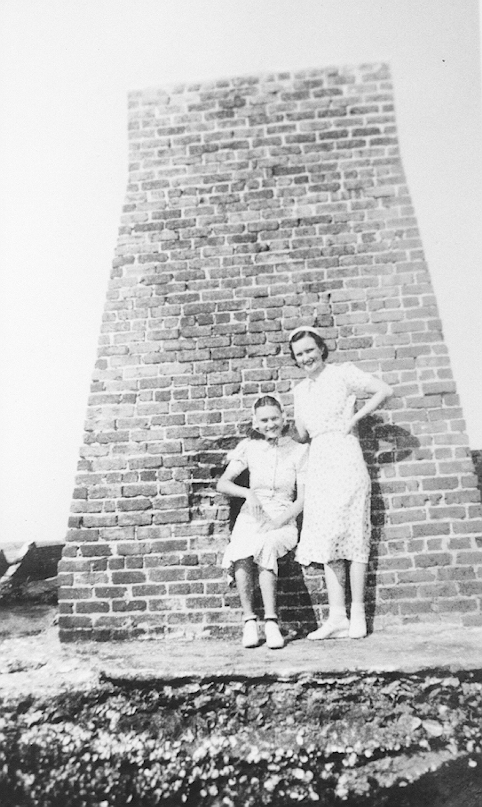
Possibly an earlier Casey’s Island Camp–photo in NPS photo file but no other info besides the photo log entry. Two other related photos exist (click red link above)

Lionel Gilgo, Jr., who lived on Portsmouth till 1944 (6 years old then) remembers a square or rectangular structure situated mid-island behaving wood siding painted white, but weathered. He does not recall “Club Rouse” or any of activity on the island.
Credits
- NPS files and archives
- Robert and Darlene Miller interview
- Dean C. Smith interview and photos
- Steve Goodwin–The Researcher–Carteret Historical Society
- Connie Mason helped identify Dorothy ‘s and Clara’s last name
- other credit as documented in the text