
Contents
Story
Decoys
Credits

🟡 LARGE RESEARCH VOLUME
OWNERS
Multiple Members
1902-1933
OTHER ASSOCIATIONS
Core Banks Club
Cedar Banks Club
LOCATION
Southern Core Banks, Cedar Banks near site of old Cedar Inlet
Story


do you know more? contact me.
Title
“They boarded iron horses in New jersey and New York to escape the bitter winter and the stresses of the boardroom. After a leisurely dinner in the first-class car, a sniffer of cognac and a fine cigar, they retired for the evening. These northern captains of industry—steel and railway tycoons mostly—awoke the next morning a world away in North Carolina.
They came for pintails and canvasback; they came for scaup and geese. They came for a respite from the busy world that they created, dominated and owned, these well-to-do Yankee sportsmen. In pursuit of waterfowl, they established hunting clubs, great and small, along the North Carolina coast. Many came to Core Sound, where the redhead was king.”—
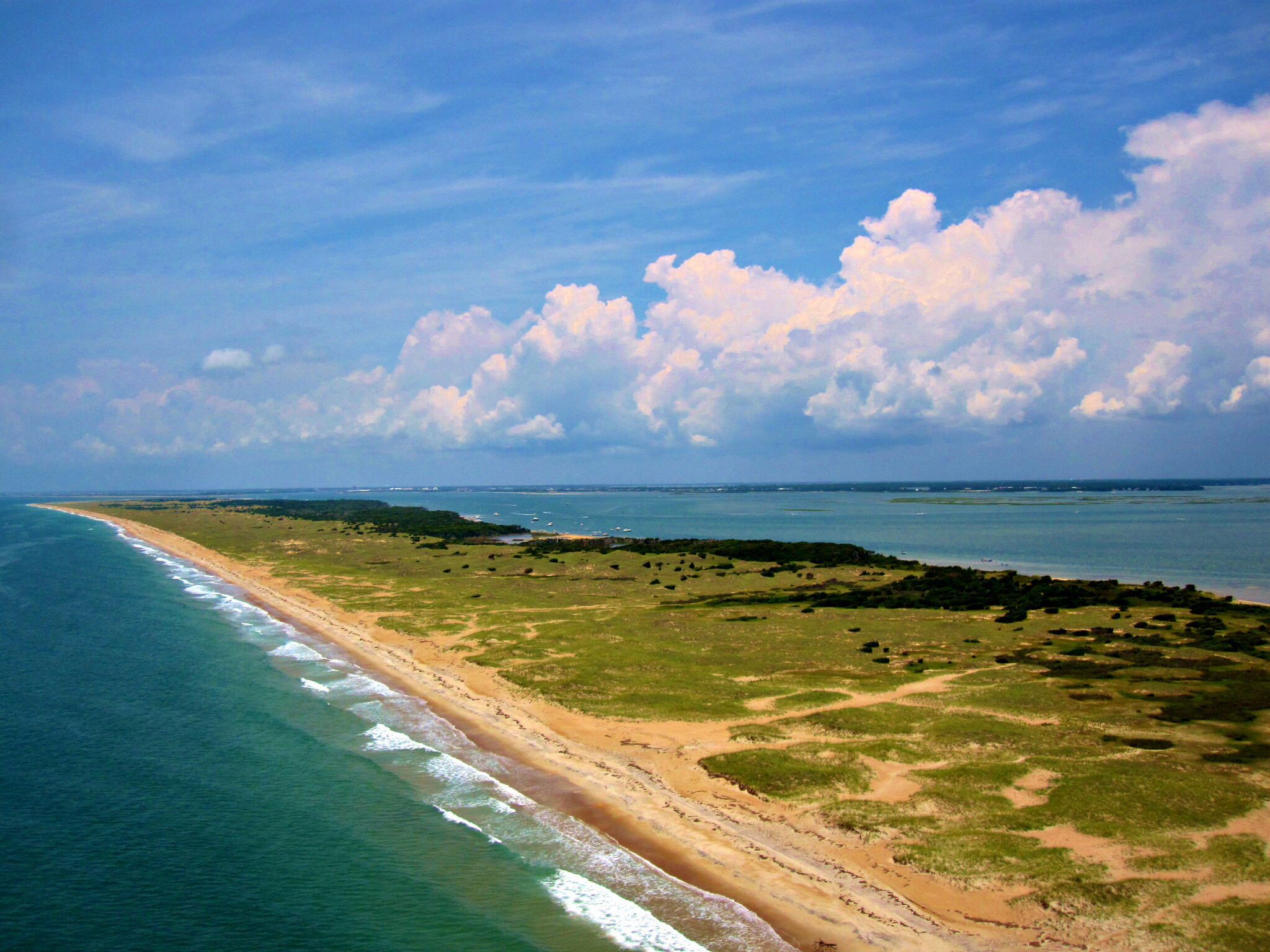
“Sheltered from the harsh Atlantic Ocean by the Core Banks to the east, Core Sound’s productive waters, stretching some 30 miles from Cape lookout to Portsmouth Island, provided a rich nursery for fish and a winter haven for waterfowl. These bountiful waters sustained native peoples and settlers alike for generations. For wealthy northern sportsmen entering the 20th century, this was the perfect place to escape from, the hustle and bustle of the booming Industrial Age.” (Rodney Foushee)
Benjamin Vosburgh, of N.J., purchased land on Cedar Banks (Core Banks) at the turn of the century and with associates formed the Carteret Gun and Rod Club Company of North Carolina. Construction of the hunting/fishing lodge was completed in 1902 under supervision of Raymond Paul of Davis. Ammie Paul, his son, served as initial caretaker–followed by others. Leroy Davis became caretaker in 1915. (A letter to Davis follows)
Why is the story of the Carteret Rod and Gun Club so precious, so special, to the local Downeast community?————
The impact of the establishment of the club extended beyond the wealthy businessmen/sportsmen who came to hunt or fish with friends, clients or business associates-up to 24 at a time. The owner’s families and friends came to the club outside of the hunting season to vacation (though no women were allowed during the season). As the club came to be owned by in-state membership, the use by member family and friends expanded. Jahn Hagan is quoted as regretting that kids and grandkids would no longer be able to have experiences like that of the preceding generation.
But what about locals? “The Clubhouse”, as it was locally known, seemed a part of the fabric of Davis—sitting 4 miles across the sound—bringing wide impact and connection to the Downeast community. Raymond Paul, chief carpenter, led local builders to erect the structures (beginning as early as 1898, completed for use in 1902). They were paid $1 a day for their ten hour day as they completed the clubhouse, accessory structures and homes for the caretakers. Local sailboats and skiffs ferried supplies across to ther site.
Davis supplied almost all the caretakers, seasonal guides and cooks for the function of the club. Materials, provisions, ferry service and mainland dockage was provided locally through the years. Off season, ther club was used by locals for family outings to the Banks or as an access point from which to head to the Cape for dances or just visits. Church outings used the site for gatherings. The youth are described as running up and down the dunes and cavorting on the Banks. The pier made for a functional and convenient access for locals. One guide carried 10-20 redheads (preferred over turkey) from the club to local homes for Christmas dinner.
If you talk with Ricky Nelson or Richard Gillikin about club memories in their youth, you can almost see their mind go back in time to describe the wonder and special memories they retain. Helping clean ducks for $1 each, or getting the fires going in the morning ( often using wooden decoys for starters), or the gun rack full of expensive Brownings—oh yes, and the food.
There was and is a sense of ownership or partnership that locals seem to feel about the Rod and Gun Club. They also share a common sense of loss, a feeling of regret, at the demise of this community landmark.


The NPS photo above is from the 1960s still reflects the structure and setting


Decoys
Jackie Booth, a collector of local club decoys, believes this club never had dedicated, marked or branded decoys but instead used decoys owned by their guides, used decoys by local carvers and brought, or sent ahead, barrels of decoys for seasonal use. Harbor Island Shooting Club decoys may have been used by them as well. (HISC and Mitchell Fulcher decoys seen below)


Credits
- NPS archives and files
- Jack Dudley’s books–Southern Outer Banks– and–Carteret Waterfowl Heritage–provide additional content and photographs-not duplicated here
- Richard Gillikin–camp photo and history of his time and that of grandfather Ward Murphy at the club
- John Hagan–Greensboro / Core Banks Club Member
- Rodney Foushee–Core Sound’s Historic Hunting Clubs–Wildlife in North Carolina-Dec. 1999
- Other references within text